Ierapetra
On the map, Ierapetra holds a precise distinction: it is the southernmost urban settlement in Europe, further south even than Tuni...
Updated 8 July 2026
This season · July · Summer
What to do in Ierapetra now
The story
The story of Ierapetra
Origins and ancient Hierapytna
The earliest traces of settlement on the site date back to the Minoan age, but it is in the Doric period that the city truly begins to matter: Hierapytna becomes one of the most powerful poleis of eastern Crete, capable of subduing neighbouring Praisos and contesting the island's supremacy with Knossos and Gortyn. With the arrival of the Romans, in the 1st century BC, the city changes scale: it becomes the main commercial port of southern Crete, a waypoint on the routes toward Africa, and grows rich with public buildings, baths and villas with mosaic floors, some of which — I'm thinking of the celebrated mosaic of the Triumph of Dionysus — are today preserved in the town's small but precious Archaeological Museum, housed in a former Ottoman hammam in the heart of the old town. With the fall of the Western Roman Empire, Hierapytna carries on its life under Byzantium, before suffering, like the rest of Crete, the Arab conquest of 824, an episode that ushers in a century and a half of Saracen rule and leads to a slow depopulation of the coast.
Arabs, Venetians and Ottomans: layers of history in the old town
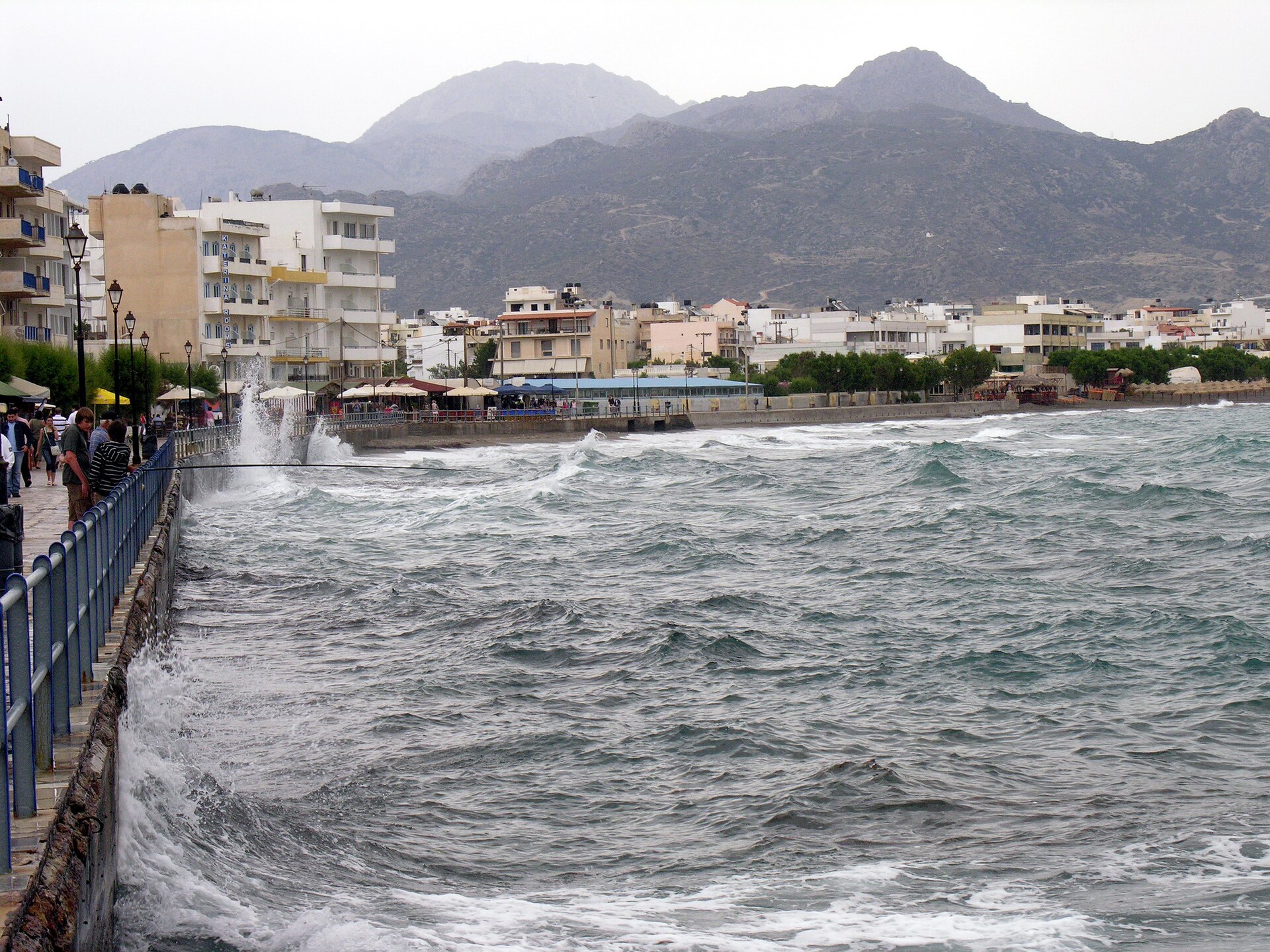
Reconquered by Byzantium in 961, the city then passed under the control of the Republic of Venice, which from the 13th century onward governed Crete as a strategic colony and renamed it Girapetra. It is to the Venetians that we owe the urban layout still recognisable today as you wander the narrow lanes of the old town, with its low houses and hidden courtyards. In 1647 the Ottomans conquered the city and remained until 1898, leaving a mark as visible as it is unexpected for an unsuspecting visitor: the minaret of the Ibrahim Han Mosque, still rising beside the harbour today, and the so-called Napoleon's House, a building perched right over the sea where, according to local tradition, the future emperor spent a night in 1798, during a stop of the French fleet bound for Egypt. Anecdote or not, the house — today tiny and facing directly onto the waves — remains one of the most photographed corners of the old town.
The Kales fortress and the old harbour
Towering over the small fishing harbour is the Kastelli, or Kales fortress, a fortification built by the Venetians in the 13th century atop an earlier Byzantine structure, then reinforced by the Ottomans to protect the anchorage from Barbary pirate raids, a real threat along the whole southern coast of Crete in the modern era. The fortress, built of pale stone, can be visited free of charge and rewards visitors along its ramparts with a view that sums up the town: fishing boats moored just a few metres away, the pedestrian seafront stretching toward the beaches, and behind it all the open sea toward Africa. Around the fortress at sunset, the old harbour comes alive with tables and the smell of grilled fish, one of the few corners of Ierapetra that still holds a truly Mediterranean atmosphere in the most classic sense of the word.
Chrissi, the golden island of the Libyan Sea
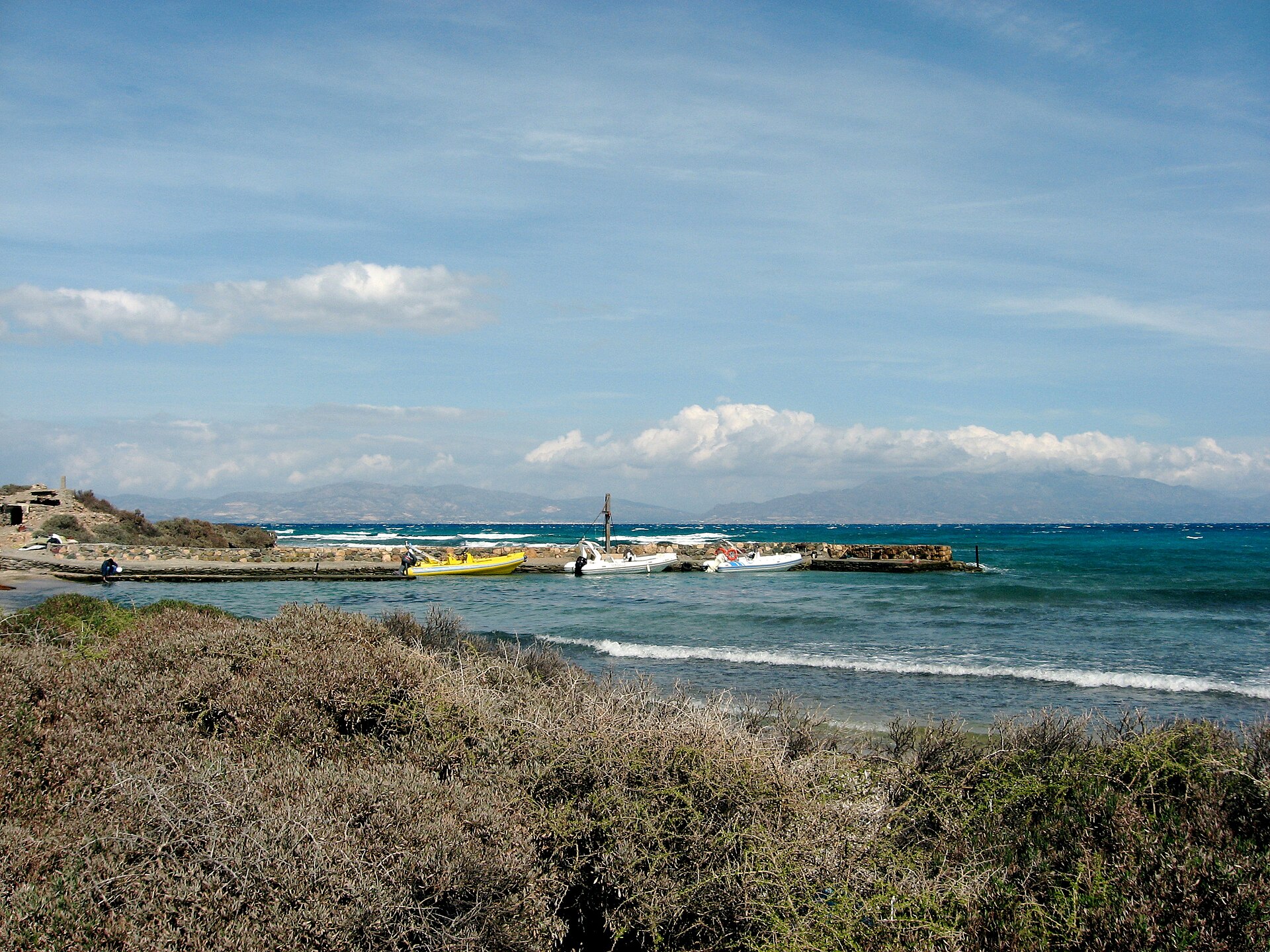
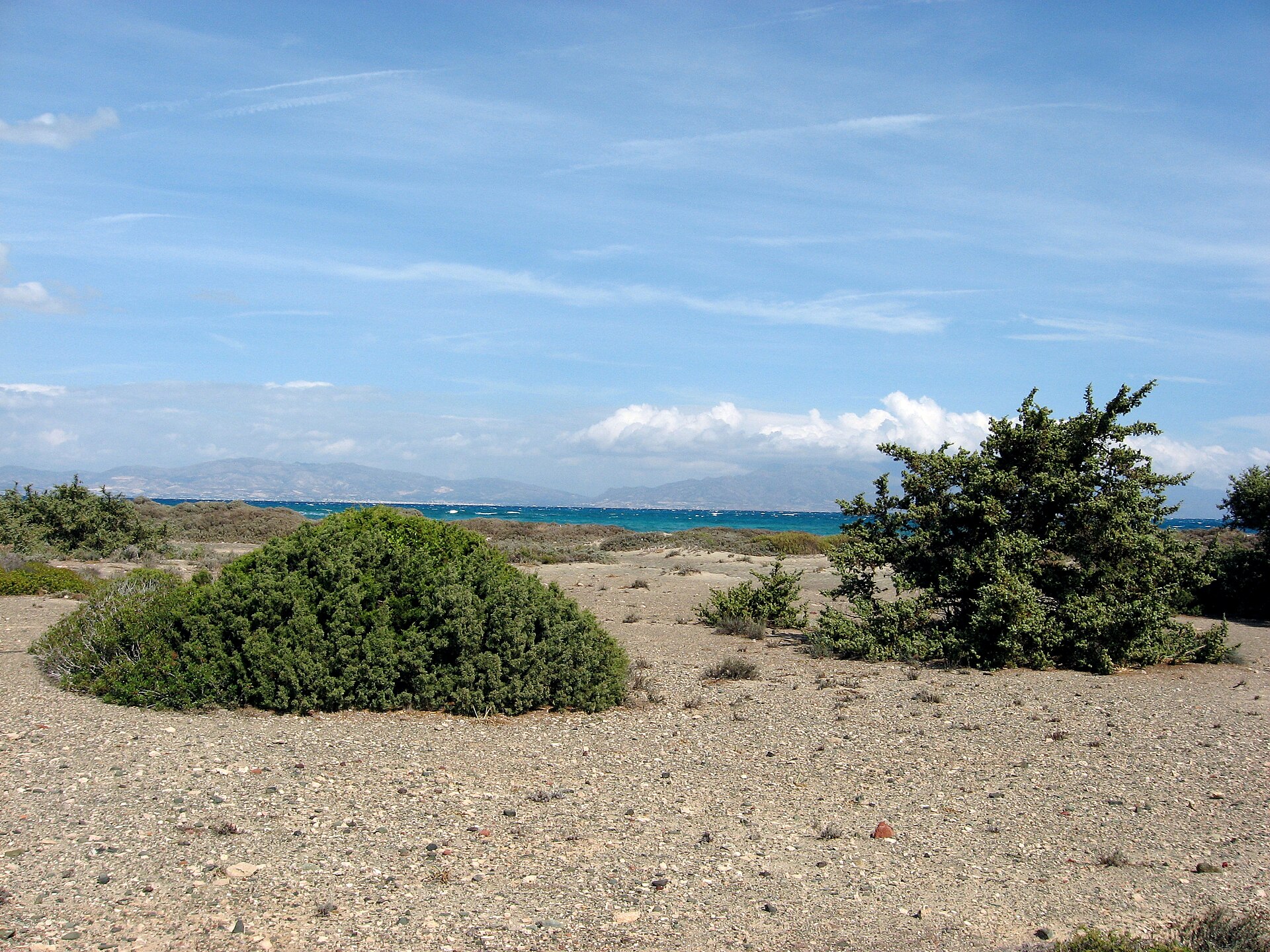
About an hour's ferry ride from Ierapetra's harbour lies Chrissi, also known as Gaidouronisi, an uninhabited islet protected as a nature reserve. It's the reason many travellers choose Ierapetra as their base in the first place: Chrissi is home to the largest Phoenician juniper forest in the Mediterranean, dunes of white and golden sand sculpted by the wind, and the famous Chrissi Avgo beach, where fragments of pink shells tint the shoreline in a coral hue. There are no roads or permanent settlements, just a couple of seasonal tavernas near the landing point: the rest is a string of coves reachable on foot, ideal for anyone seeking turquoise water far from the crowds. The island can only be reached by the tourist boats that depart every morning from the town's harbour.
The coastline and the mountainous hinterland
Ierapetra's palm-lined promenade runs for over two kilometres along a stretch of dark sand that slopes gently into a sea that is almost always calm, sheltered from the prevailing winds: it's no surprise that people swim here comfortably as early as March and as late as November. Heading west along the coast you reach Myrtos, a fishing village turned destination for quiet tourism with one of the area's best-loved beaches, and the archaeological site of Gournia, one of the best-preserved Minoan urban complexes on Crete. Inland, by contrast, the landscape changes dramatically: coastal Ierapetra gives way to the mountain villages of the Thripti massif, amid terraced olive groves and narrow gorges, all the way up to the Lasithi Plateau with its famous windmills, an excursion of just over an hour's drive that offers a cool, green counterpoint to the heat of the coast.
Greenhouses, agriculture and local flavours
Anyone arriving in Ierapetra by car encounters, even before reaching the town, kilometres of plastic greenhouses covering the plain: this is the backbone of the local economy, which has made the area one of Greece's main agricultural basins for tomatoes, cucumbers and aubergines grown almost year-round thanks to the microclimate. This agricultural calling is also reflected on the table: Ierapetra's cuisine combines produce from the fields with produce from the sea, in dishes such as ntakos (the characteristic Cretan bruschetta made with barley paximadi, fresh tomato and mizithra cheese), grilled fish from the harbour, slow-cooked lamb for festive occasions, and of course the local olive oil, among the island's most highly regarded. In the summer months, the nearby villages are full of folk festivals known as panigyria, with live Cretan music, lute and lyra, and raki passed from table to table late into the night.
- Strolling at sunset around the Kales fortress and the old harbour
- A boat trip to the island of Chrissi and its pink-tinted beach
- Visiting Napoleon's House and the Ottoman minaret in the old town
- The Archaeological Museum, for the Roman mosaics of ancient Hierapytna
- A detour to the Minoan site of Gournia along the coast toward Myrtos
- A drive up to the Lasithi Plateau and its windmills
- Dinner of fresh fish at the tavernas along the seafront
FAQ
Come si arriva a Ierapetra?
Qual è il periodo migliore per visitarla?
Cosa vedere a Ierapetra in un giorno?
Dove si parcheggia in centro?
Quanto tempo serve per visitare Chrissi?
È adatta a famiglie con bambini?
Getting there
- Aeroporto di Sitia (JSH), circa 40 km / 40 minuti
- Aeroporto internazionale di Heraklion (HER), circa 95 km / 1h30
- Da Heraklion si segue la superstrada verso est fino a Ierapetra (circa 1h30 d'auto); da Agios Nikolaos bastano 40 minuti lungo la strada costiera che attraversa Gournia.
- Se il piano prevede l'isola di Chrissi, conviene prenotare il biglietto della barca il giorno prima nei mesi di alta stagione, quando i posti si esauriscono in fretta.
Perfect for
Spiagge di sabbia scura protette dal vento e acque calde quasi tutto l'anno, oltre alla gita all'isola di Chrissi dalla sabbia rosata.
Un centro storico che racconta duemila anni di dominazioni, dai mosaici romani al minareto ottomano fino al forte veneziano di Kales.
Dalla costa all'altopiano del Lasithi in meno di due ore, tra gole di montagna, uliveti terrazzati e mulini a vento.
Cucina cretese autentica, tra ntakos, pesce del porto e i prodotti delle serre che hanno reso Ierapetra la capitale agricola dell'isola.
Un turismo più lento e meno battuto rispetto al nord di Creta, ancora legato ai ritmi della pesca e dell'agricoltura.
To see
What to see in Ierapetra
Routes · Trovido Route