Amoudhi
Along the north-eastern coast of Zakynthos, where the silvery green of centuries-old olive trees seems to plunge straight into the...
Updated 7 July 2026
This season · July · Summer
What to do in Amoudhi now
The story
The story of Amoudhi
Historical roots: between Venice and resilience
The history of Amoudhi is closely tied to the events of the entire island of Zakynthos, the 'Zante' celebrated by Ugo Foscolo. For centuries, this area lived under the influence of the Most Serene Republic of Venice, which left an indelible mark on the local architecture, language and traditions. Amoudhi, originally a small harbour for fishermen and a collection point for agricultural produce from the hinterland, has retained a rural and maritime vocation over time. A watershed event for the community was the devastating earthquake of 1953, which reshaped the face of the island. Despite the destruction, the inhabitants managed to rebuild with respect, preserving the spirit of the place. Today, Amoudhi bears witness to this capacity for rebirth, blending modern needs with traditional Ionian aesthetics, made up of red-tiled roofs and pastel-coloured walls reminiscent of the Venetian elegance of times past.
Amoudhi Beach: an embrace of sand and light
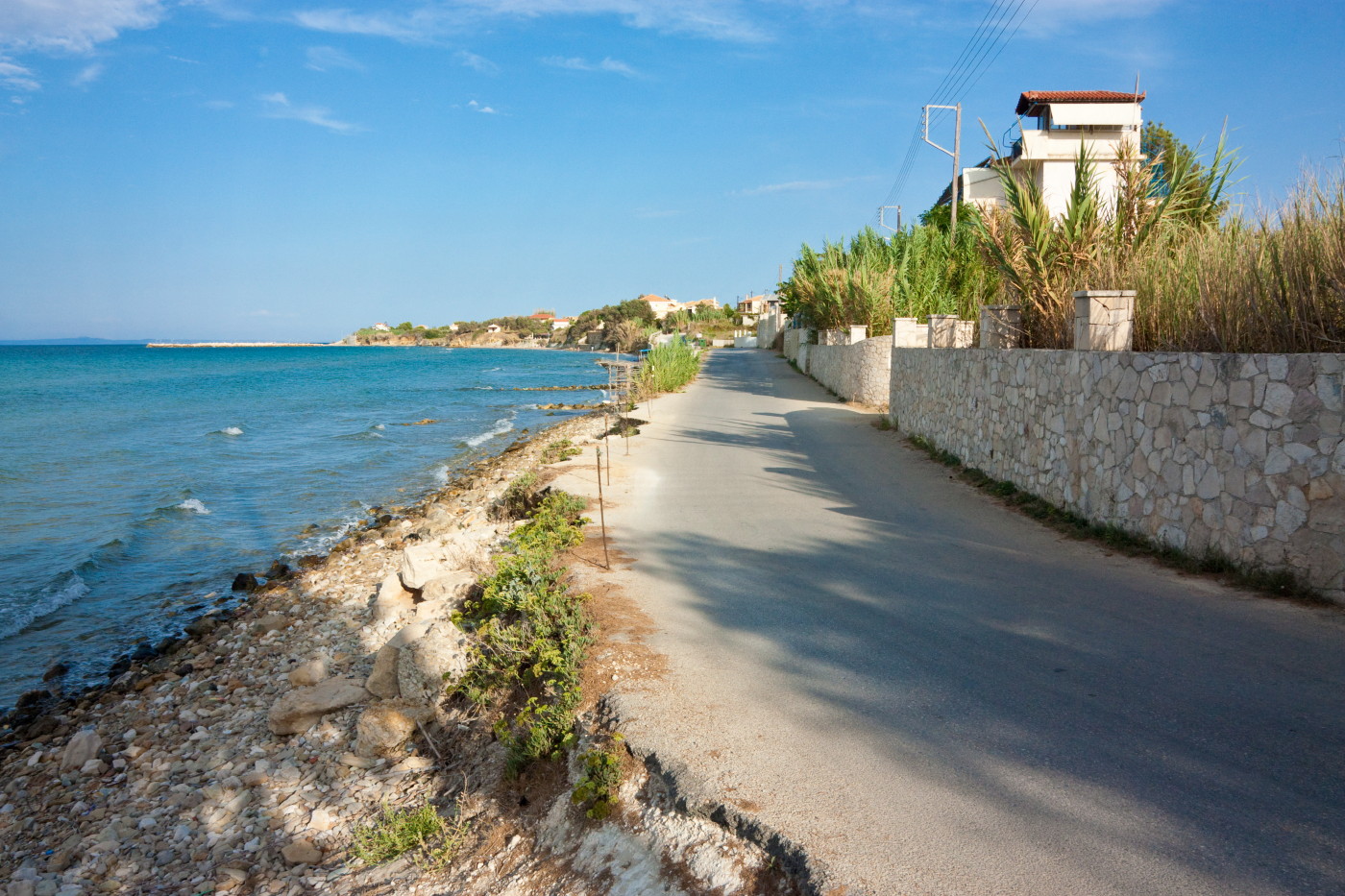
The beating heart of the village is its beach, a narrow strip of golden sand mixed with white pebbles overlooking waters of an almost unreal clarity. Amoudhi beach is famous for its shallow seabed that slopes gently, making it a safe paradise for families and for those who love swimming in total relaxation. What makes it special is its natural setting: Mediterranean vegetation reaches almost to the water's edge, offering natural shaded areas and a colour contrast between the emerald green of the plants and the cobalt blue of the sea. Despite its beauty, it is never overly crowded, allowing visitors to enjoy the sound of the sea in an atmosphere of rare serenity. Along the shoreline, small equipped areas coexist harmoniously with completely free stretches, keeping the wild character of the coast intact.
The agricultural landscape: centuries-old olive groves
Behind the built-up centre of Amoudhi stretches a hinterland dominated by an almost unbroken expanse of olive trees. Many of these trees are true living monuments, with gnarled, sculptural trunks that tell centuries of agricultural history. This area is the green lung of the locality and offers ideal routes for rejuvenating walks or bicycle excursions. Walking along these paths, one discovers the importance of agriculture for the local community: besides olive oil of the highest quality, vines and fruit trees are also cultivated. The landscape is dotted with old farmhouses and dry-stone walls, elements that define Amoudhi's rural identity and offer an authentic glimpse of daily life far from the more beaten tourist routes. It is here that one perceives the true essence of the Mediterranean, amid the scent of sun-baked earth and wild aromatic herbs.
The nearby salt pans of Alykes and Alykanas
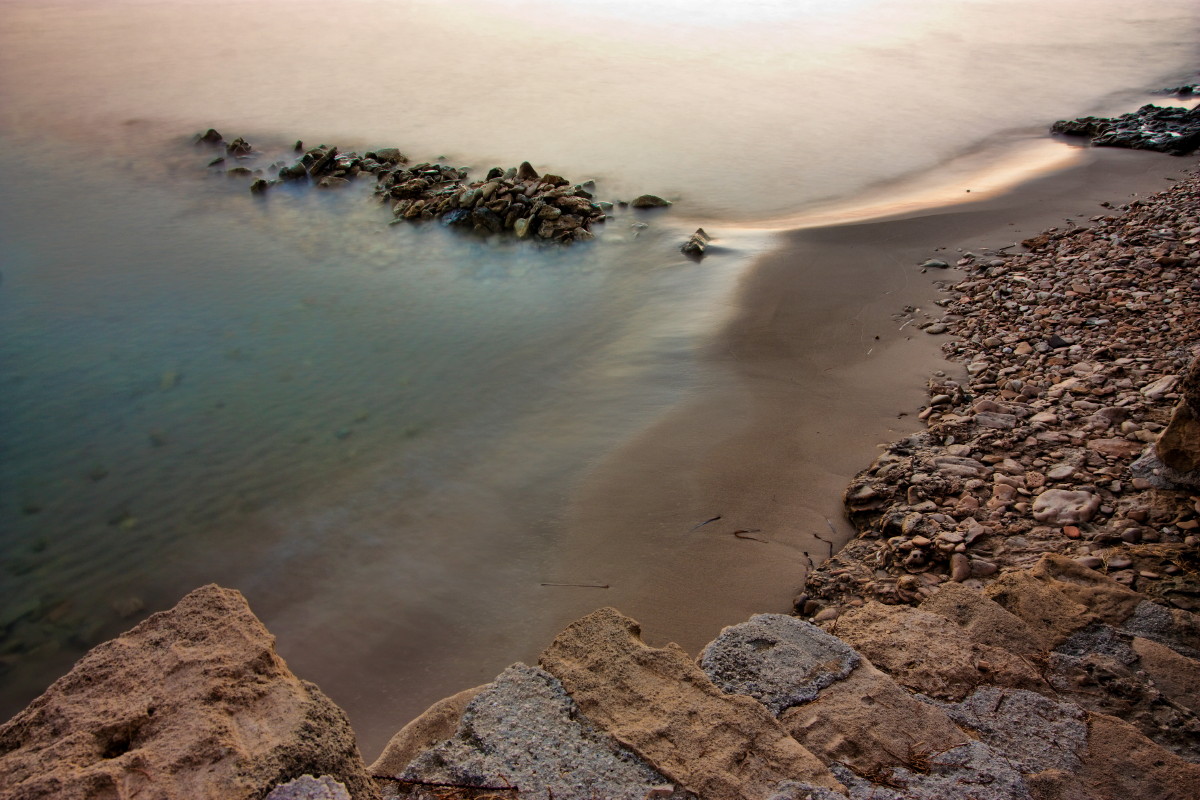
A short distance from Amoudhi lie the towns of Alykes and Alykanas, historically fundamental to the local economy thanks to their salt pans. The name 'Alykes' derives precisely from the Greek word for salt pans, which for centuries were the main source of income for the local inhabitants. Today, the areas of the former salt pans have become an interesting wetland, where various species of migratory birds, including sometimes flamingos, can be observed. Visiting these towns from Amoudhi allows one to understand the deep bond between people and the natural resources of the territory. While Alykanas offers greater liveliness with its shops and cafes, the stretch between the two areas rewards visitors with panoramic views over the bay and the surrounding hills, creating an itinerary that combines industrial history, nature and seaside leisure.
Gastronomic traditions and local flavours
Cuisine in Amoudhi is a celebration of the produce of the land and the sea. In the local taverns, fresh fish is the undisputed star, caught daily and cooked simply to bring out its flavour. However, you cannot say you have truly known Amoudhi without having tasted 'Ladotyri', a spicy cheese preserved in olive oil typical of Zakynthos, or 'Sartsa', a meat stew enriched with tomato, garlic and local cheese. The desserts are no less impressive: 'Mantolato' (white nougat) and 'Pasteli' (a sesame and honey bar) represent the island's sweet heritage. Dining on one of Amoudhi's sea-view terraces, pairing the dishes with the local 'Verdea' wine, a dry and structured white, is a sensory experience that completes the journey, allowing one to savour Greek culture through the palate.
Experiences not to be missed
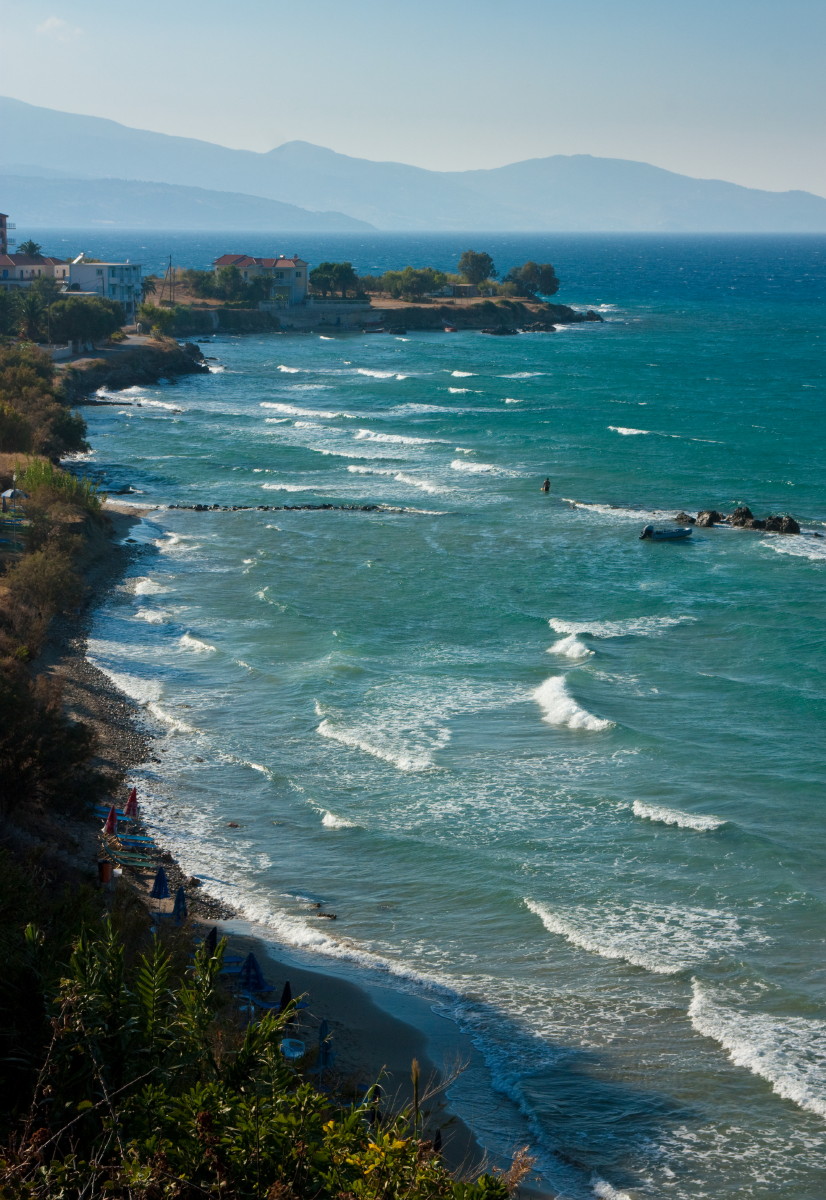
- Hire a small motorboat to explore the isolated coves to the north.
- Enjoy a sunset dinner at a taverna overlooking the cliffs.
- Walk along the shoreline at dawn when the sea is as flat as a table.
- Take part in an olive oil tasting at a local producer in the hinterland.
- Explore on foot the paths that connect Amoudhi to the village of Psarou.
- Visit the nearby little church of Agios Nikolaos to admire its post-Byzantine icons.
The coast towards Psarou: cliffs and secrets
Heading south from Amoudhi, the coastline becomes more rugged and fascinating. The coastal path leading to Psarou is a succession of small rocky coves and hidden beaches, often reachable only through narrow passages or by sea. This area is particularly loved by snorkelling enthusiasts, thanks to the richness of the marine life and the clarity of the waters, which allow exceptional visibility. The rock formations create small caves and coves where sunlight plays with the reflections of the water, creating natural scenes of great emotional impact. It is a route that invites slow discovery, far from the crowds, where every curve of the coast can reveal a new corner of private paradise, ideal for those seeking solitude and contemplation.
When to go and how to experience the village
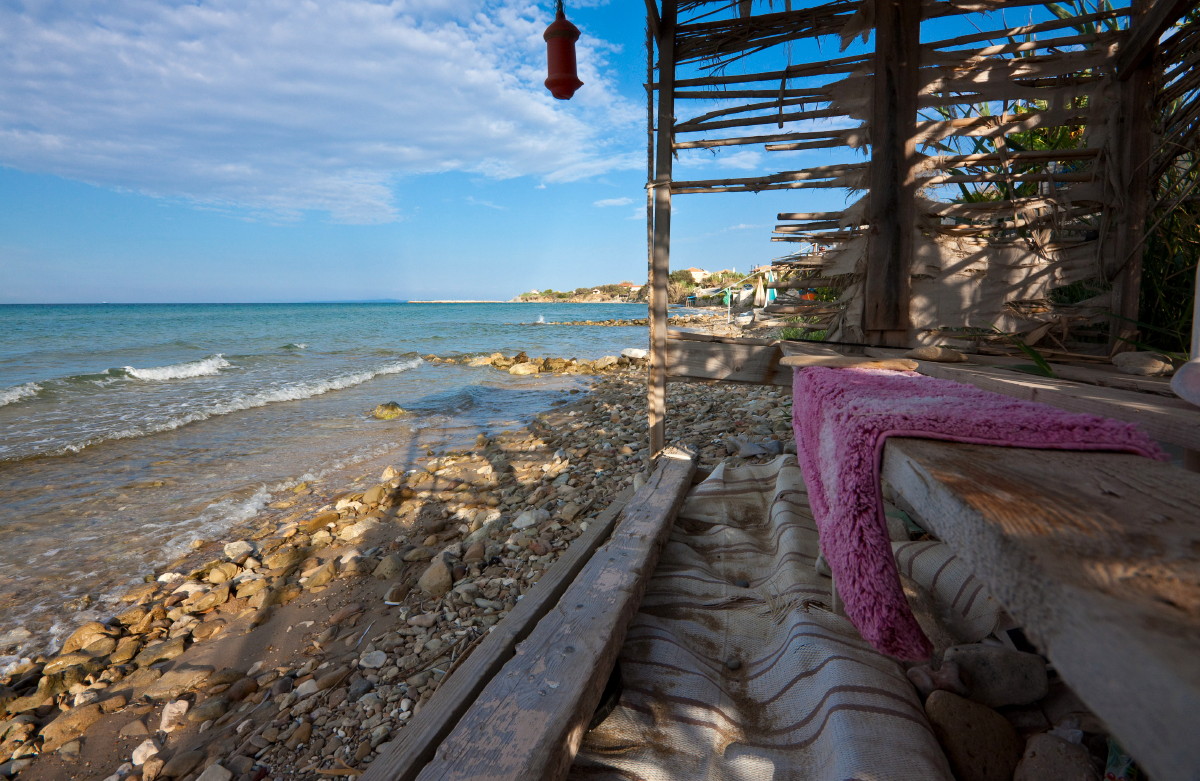
The best time to visit Amoudhi runs from May to October. Late spring (May and June) is magical: nature is in full bloom, temperatures are mild and visitor numbers are minimal, allowing you to fully enjoy the peace of the place. September and early October offer waters that are still warm and a golden light that makes the landscapes particularly evocative. During high summer (July and August), Amoudhi remains cooler and quieter than the southern areas of the island, thanks to the sea breezes that mitigate the heat. Living Amoudhi means adopting a slow lifestyle: waking early to watch the sun rise from the sea, dedicating the midday hours to relaxation and ending the day with a long al fresco dinner, lulled by the sounds of the Greek night.
FAQ
È necessario noleggiare un'auto per soggiornare ad Amoudhi?
La spiaggia di Amoudhi è adatta ai bambini?
Quanto dista Amoudhi dalla città di Zante?
Ci sono supermercati o farmacie nel villaggio?
Getting there
- Aeroporto Internazionale di Zante 'Dionysios Solomos' (ZTH) - 18 km
- Non sono presenti linee ferroviarie sull'isola.
- Dall'aeroporto o dal porto di Zante Town, seguire le indicazioni per Tsilivi e successivamente procedere verso nord in direzione Alykanas/Amoudhi.
- Le strade costiere sono strette e tortuose; guidate con prudenza, specialmente di notte, e godetevi i punti panoramici lungo il tragitto.
Perfect for
Perfetto per chi vuole fuggire dal caos e ritrovare il contatto con una natura incontaminata e ritmi lenti.
Le acque calme e l'atmosfera sicura lo rendono una meta d'elezione per chi viaggia con bambini piccoli.
Un'ottima base per scoprire i sapori autentici della cucina ionica e l'eccellente produzione di olio e vino locale.
To see