Argostoli
Overlooking the cobalt waters of a broad natural bay that reaches deep into the heart of Kefalonia, Argostoli presents itself to t...
Updated 7 July 2026
This season · July · Summer
What to do in Argostoli now
The story
The story of Argostoli
A history of dominations and rebirths
Argostoli's origins as the island's main center date back to the 18th century, when the Venetians decided to move the administrative center from the inland castle toward the coast, to favor maritime trade. Under the Lion of Saint Mark, the town grew rich with stately palaces and theaters, taking on a markedly Italian appearance. Later, the passage under British protectorate in the 19th century brought a wave of infrastructural modernity, profoundly shaping the town's urban layout. However, the 20th century was merciless: first the Italian occupation and the massacre of the Acqui Division in 1943, then the 1953 earthquake that changed the town's features forever. The reconstruction sought to preserve the original spirit, with wide streets and airy squares, making Argostoli an example of urban resilience where the past, though wounded, continues to narrate its strategic importance in the Ionian Sea.
The De Bosset Bridge and the Koutavos Lagoon
Argostoli's most iconic architectural work is undoubtedly the De Bosset Bridge, the longest stone bridge over seawater in the world. Originally built in wood in 1813 by the Swiss engineer Charles de Bosset, then governor on behalf of the British, it was later reinforced in sandstone. This roughly 650-meter structure connects the town to the opposite shore of the bay, separating the open sea from the tranquil Koutavos Lagoon. Walking along the bridge at sunset, with views ranging from the surrounding mountains to the reflections on the water, is an almost mystical experience. Halfway along stands a monumental obelisk celebrating the gratitude of the inhabitants toward the builders. The lagoon itself is today a protected nature reserve, a refuge for various species of migratory birds and an ideal place for a rejuvenating walk away from town traffic.
The Saint Theodore Lighthouse
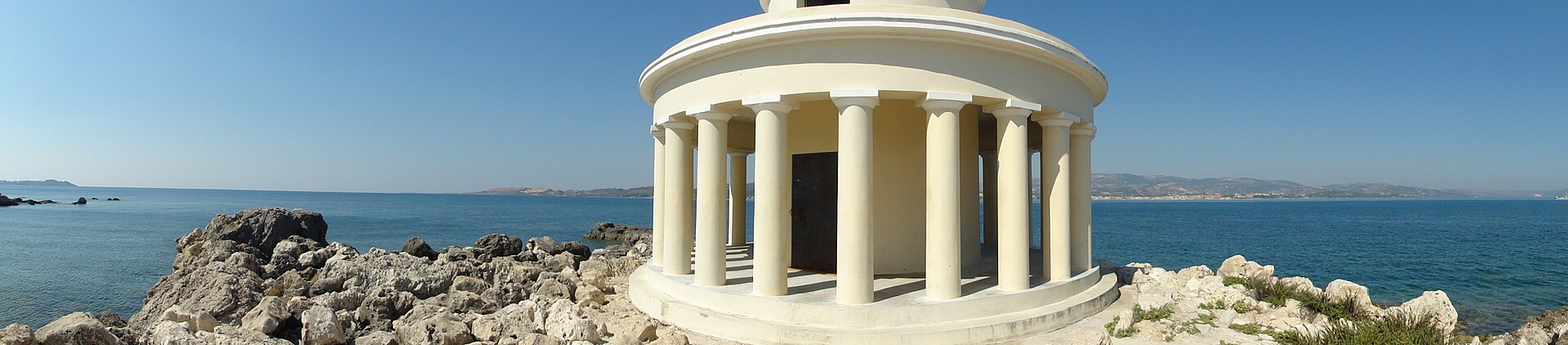
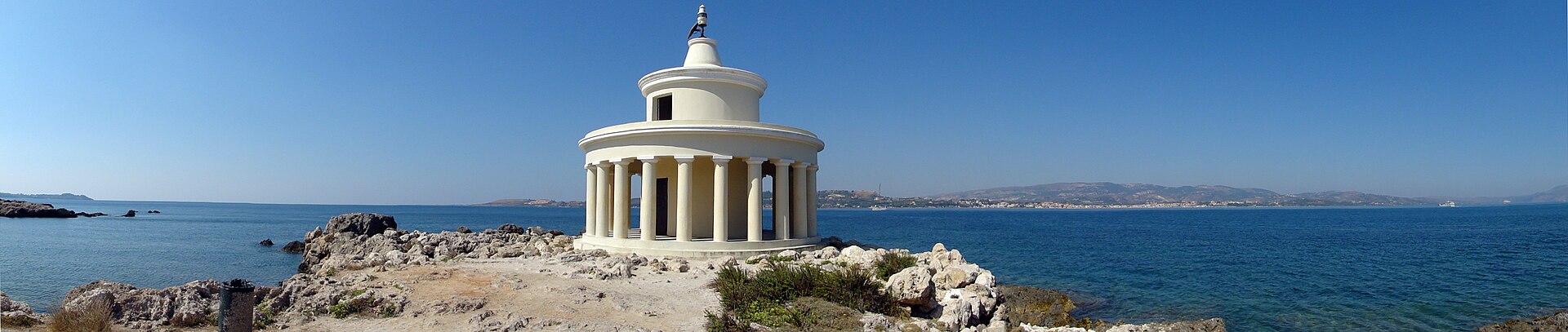
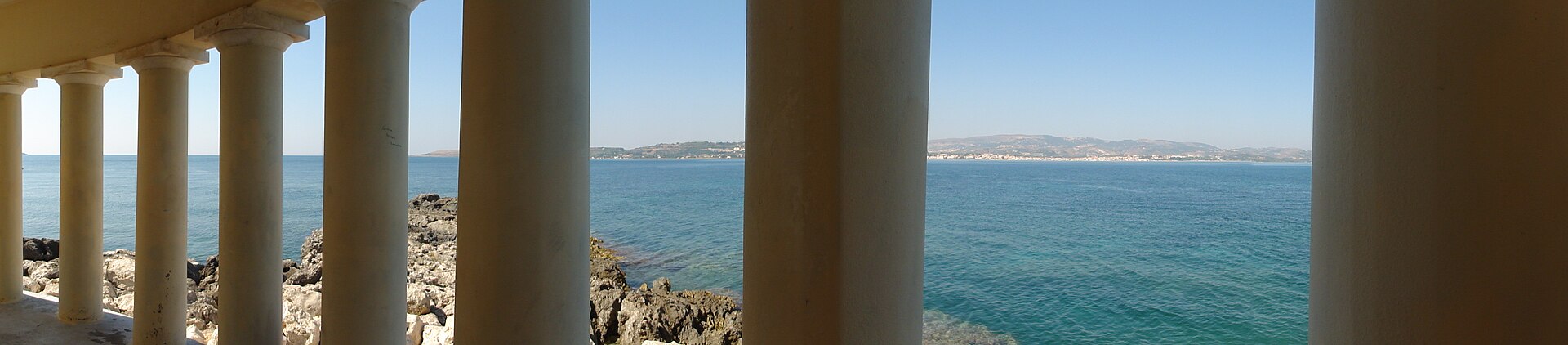
Located on the tip of the Lassi peninsula, a short distance from the center, the Saint Theodore Lighthouse (also known as Fanari) is a gem of neoclassical architecture. Built in 1828 during the British administration to a design by Charles Napier, it stands out for its circular shape surrounded by twenty Doric columns, an unusual design for a maritime signaling structure. Although the original was destroyed by the 1953 earthquake, it was faithfully rebuilt following the period drawings, preserving its timeless elegance. The lighthouse is not only a landmark for sailors entering the Gulf of Argostoli, but also one of the most romantic spots on the island, perfect for watching the sun disappear behind the Lixouri peninsula, tinting the white columns and the surrounding sea red.
The Katavothres: the geological mystery
A short distance from the lighthouse lies one of the strangest natural phenomena on the planet: the Katavothres. Here, huge quantities of seawater funnel into underground fissures and seem to vanish into nothing. For decades scientists wondered where this water went, until a dye experiment in the 1960s revealed the incredible truth: the water crosses the entire island underground, taking about two weeks to resurface on the opposite side, in the Melissani Cave and near the village of Karavomylos, mixing with fresh water. In the past, the force of this flow was used to power water mills, of which today the evocative monumental wheels remain. It is a place that invites reflection on the complexity of nature and the beauty of the secrets the earth still holds.
Vallianos Square and social life
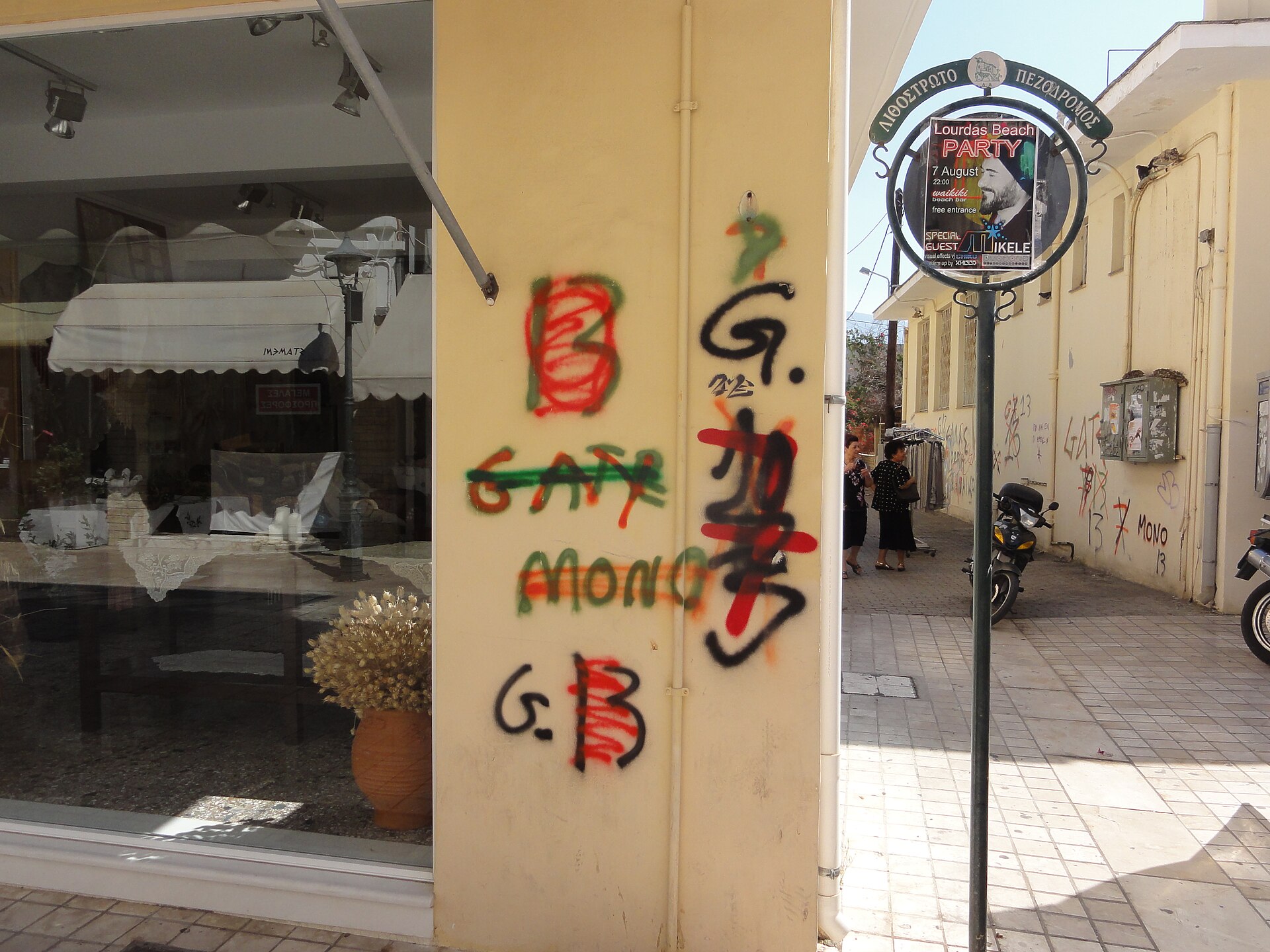
The beating heart of Argostoli's social life is Vallianos Square, a vast pedestrian esplanade surrounded by cafés, restaurants and elegant hotels. At its center stands the statue of Panayis Vallianos, the great benefactor of the island who funded many public works. This square is the ideal stage for observing the 'volta', the typical Greek evening stroll: here families meet, children play and tourists mingle with locals sipping a frappé or a glass of Robola wine. From the square branch off the shopping streets, among which Lithostroto stands out, the paved street rich in boutiques, jewelers and small bakeries that spread the scent of traditional sweets. It is the place where Argostoli's modernity shows its most convivial and cosmopolitan face.
The Monument to the Fallen of the Acqui Division
Argostoli also holds a painful memory linked to the Second World War. On a hill overlooking the bay stands the Monument to the Fallen of the Acqui Division, dedicated to the thousands of Italian soldiers who were massacred by the Germans in September 1943, after the armistice, for refusing to hand over their weapons. It is a place of deep contemplation, marked by a cross and plaques that recall the sacrifice of those men. Visiting this site is essential to understanding the historical and emotional bond that unites Italy with Kefalonia, a bond cemented in blood and mutual respect. The silence that envelops the monument, broken only by the rustling of the pines, invites a pause for reflection on recent European history and the importance of peace.
What not to miss in Argostoli
- Meeting the Caretta caretta sea turtles that swim every morning alongside the fishing boats in the harbor to gather fish scraps.
- Visiting the Archaeological Museum, which houses precious Mycenaean-era finds from the island's necropolises.
- Exploring the Museum of Folklore and History, located on the ground floor of the Korgialenios Library, for a dive into pre-earthquake daily life.
- Attending a 'kantada', the traditional serenades performed by local choirs that echo Venetian musical influence.
- Shopping at the fruit and vegetable market on the waterfront, where farmers bring fresh produce from the surrounding hills.
Landscape, nature and the beaches of Lassi
Although Argostoli is a port town, just a few minutes' walk or drive away lie some of the island's most beautiful beaches. The Lassi area is the capital's seaside lung, characterized by sandy shores lapped by crystal-clear waters and surrounded by lush pine groves. Makris Gialos and Platis Gialos are the most famous beaches: wide, well-equipped and covered with extremely fine golden sand that slopes gently into the turquoise sea. For those seeking wilder spots, the coast offers small rocky coves where snorkeling is highly rewarding. The immediate hinterland, meanwhile, is dominated by Mount Ainos, the highest mountain in the Ionian Islands, whose black firs, unique in the world, form a majestic backdrop to the town, offering an extraordinary color contrast between the dark green of the woods and the blue of the sea.
Kefalonian traditions and flavors
Argostoli's gastronomic culture is a hymn to the land of Kefalonia. The signature dish is 'Kreatopita', a savory meat pie (often with three different types of meat) enriched with rice, tomato and spices, wrapped in a crispy pastry. One cannot leave the town without having tasted Robola wine, a dry, mineral DOC white produced from grapes grown on the limestone slopes of Mount Ainos. For those with a sweet tooth, 'Mandoles' are the perfect souvenir: toasted, sugared almonds colored red with a natural dye, a legacy of Venetian rule. The cuisine here is not just nourishment, but an identity ritual expressed in the many taverns along the waterfront, where fresh fish is never lacking, but it is goat and lamb meat that tell the island's most authentic soul.
When to go and how to experience the town
The ideal period to visit Argostoli runs from May to October. Late spring brings spectacular blooms and perfect temperatures for excursions, while September offers a still-warm sea and a town less crowded than the August peak. Experiencing Argostoli means adopting its rhythms: waking up early to see the turtles in the harbor, dedicating the hot hours to the beaches of Lassi, and returning to the center for the sunset ritual at the lighthouse or on the De Bosset Bridge. In the evening, the town turns into an open-air lounge where it is pleasant to lose oneself among the notes of mandolin music and the chatter of outdoor tables. It is a destination that never tires, capable of offering the comfort of urban services and the wild magic of a Greek island in one harmonious embrace.
FAQ
Dove si possono vedere le tartarughe ad Argostoli?
Quanto tempo occorre per visitare la città?
È facile parcheggiare ad Argostoli?
Come si raggiunge Lixouri da Argostoli?
Getting there
- Aeroporto Internazionale di Cefalonia (EFL) - 8 km
- Non sono presenti linee ferroviarie sull'isola.
- Dall'aeroporto seguire le indicazioni per Argostoli. Dai porti di Sami o Poros, seguire le strade principali ben segnalate che attraversano l'isola.
- Noleggiare un'auto è fondamentale per esplorare i dintorni, ma per la città ci si muove comodamente a piedi.
Perfect for
Perfetta per chi ama approfondire le vicende belliche del '900 e l'archeologia micenea.
Ideale per gli appassionati di geologia e per chi desidera avvistare le tartarughe marine in libertà.
Una meta imperdibile per assaggiare il vino Robola e la celebre torta di carne cefalonita.
To see