Fiskardho
On the northernmost tip of Kefalonia, where the deep blue of the Ionian Sea winds between the jagged coastline of Erisos, stands F...
Updated 7 July 2026
This season · July · Summer
What to do in Fiskardho now
The story
The story of Fiskardho
The roots of a name: between the Normans and the ancient Greeks
The history of Fiskardo is closely tied to its strategic position in the channel separating Kefalonia from Ithaca. Once known as Panormos, the site was already a safe harbour in classical and Roman times. However, its current name derives from a historical figure of the European Middle Ages: Robert Guiscard, the Norman warlord who led the expansion into the Mediterranean. In 1085, during a campaign against the Byzantine Empire, Guiscard died right here, aboard his ship. The village was renamed in his honour, turning "Guiscard" into the Greek "Fiskardo". Over the centuries, the village came under the control of the Republic of Venice, which profoundly influenced its aesthetics and economy, making it a key hub for the export of raisins and timber.
The Venetian Lighthouse: a sentinel of stone
Walking along the coastal path that leads north from the harbour, you reach the tip of the headland where the old Venetian Lighthouse stands tall. This stone structure, dating back to the period of Venetian rule, testifies to the village's nautical importance. Beside the original tower stands the base of a more modern lighthouse, but it is the historic building that captures the eye with its solid elegance. From this scenic spot, the view stretches freely towards the cliffs of Ithaca and the smaller islands off Lefkada. It is the ideal place to grasp the geography of the channel and to reflect on centuries of sailors who sought refuge among these rocks, guided precisely by the light of this sentinel.
The remains of the Byzantine Basilica
A short walk from the lighthouse, nestled in vegetation that seems to want to protect them, lie the ruins of a 6th-century Byzantine basilica. Although today only the foundations and a few column bases remain, the site retains an aura of sacredness and mystery. It is believed that the church was part of a larger monastic complex, built to serve the community living around the port of Panormos. The presence of these ruins confirms that Fiskardo is not merely a Venetian gem, but a layered place where Byzantine faith and art left an indelible mark before modern history redrew its contours.
The Roman Cemetery and traces of Panormos
Another archaeological gem of Fiskardo is the Roman-era cemetery, discovered by chance during building excavations near the waterfront. The tombs, carved directly into the limestone rock, date from a period between the 2nd century BC and the 4th century AD. Some are monumental and have yielded grave goods of great value, now kept in the island's museums. Visiting this site allows one to picture the continuity of settlement here: where tourists sip coffee today, two thousand years ago a sophisticated Roman society thrived, tied to maritime trade between Greece and Italy.
The waterfront: the beating heart of the village
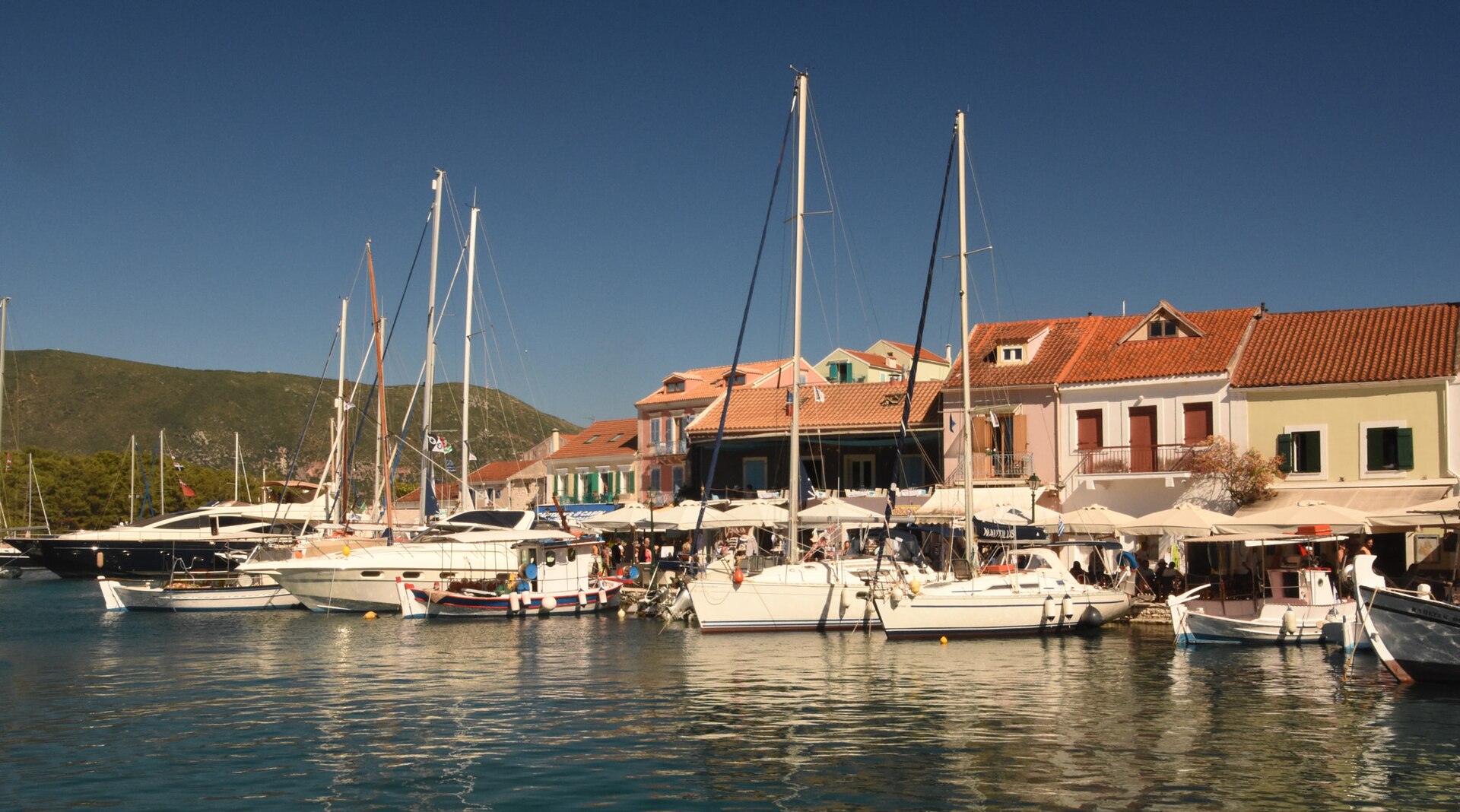
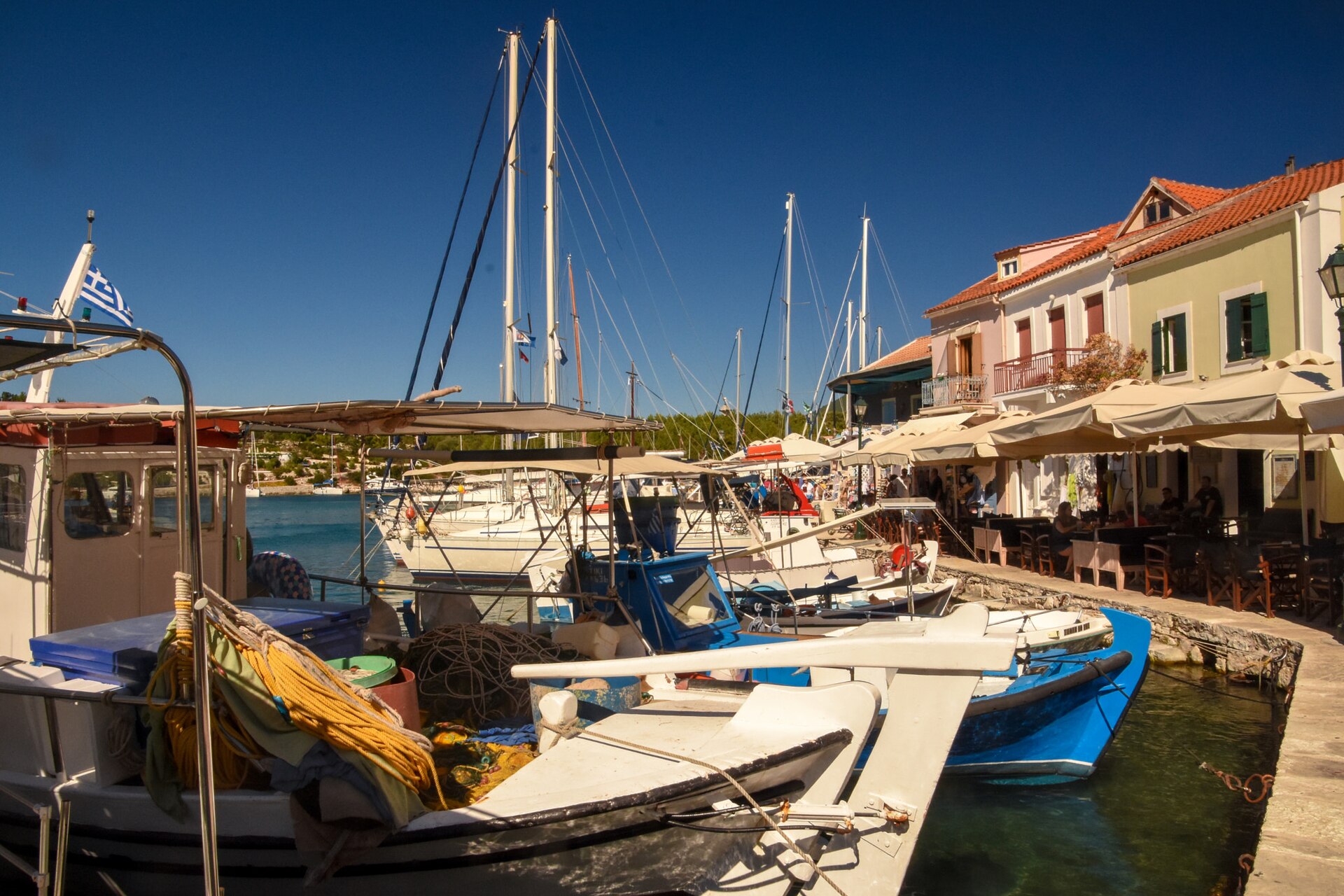
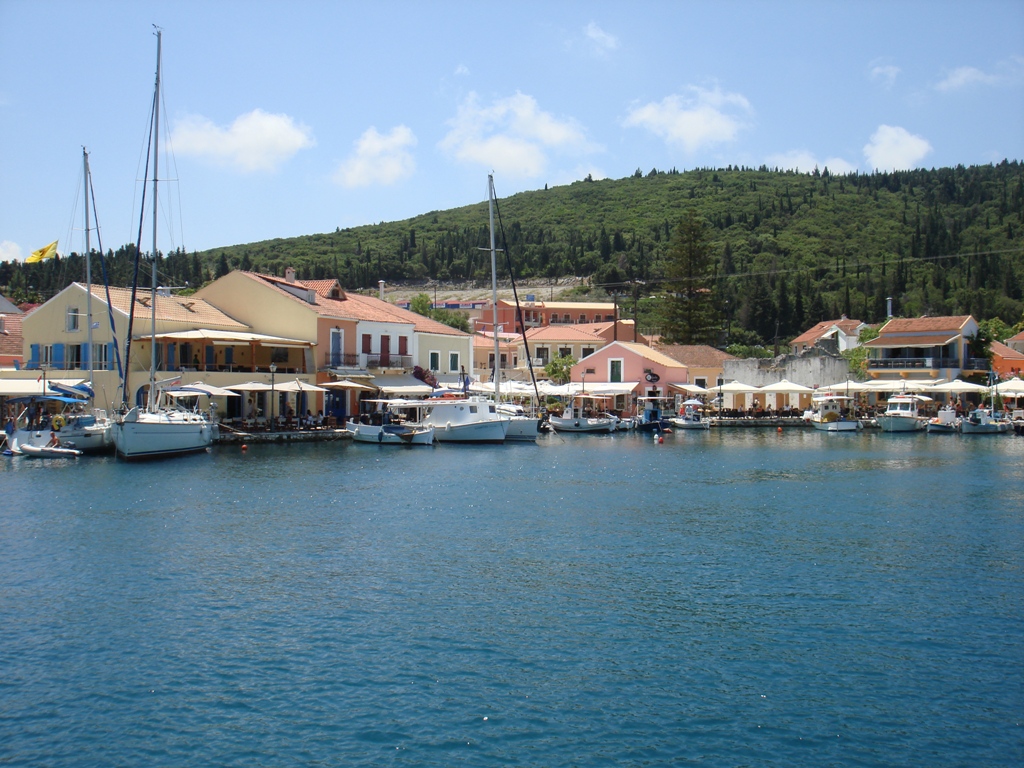
You cannot say you have truly experienced Fiskardo without spending time along its horseshoe-shaped harbour. Here architecture takes absolute centre stage: the façades of the houses, restored with meticulous care, display the warm colours of earth and sun. The ground floor of almost every building houses taverns, cafés or refined boutiques, yet the commercial side never tips into the tacky. Sitting at one of the outdoor tables means taking part in a collective ritual: watching local fishermen come and go selling the day's catch alongside sailing boats from all over the world, in a perfect balance between rural tradition and elite tourism.
Foki Beach: embraced by olive trees
A short walk from the centre lies Foki Beach, one of the most distinctive in Kefalonia. Its name comes from the monk seal, which once frequented the surrounding caves. The beach is not a classic stretch of sand but a deep, narrow bay surrounded by a dense wood of olive and cypress trees that reach right down to touch the crystal-clear water. The natural shade of the trees and the emerald colour of the sea, caused by the reflection of the vegetation, create an almost lake-like setting, ideal for those seeking cool relief and quiet away from the bustle of the harbour.
Emplisi: the dazzling white of the limestone
Continuing north-west, Emplisi beach reveals the wilder face of the Fiskardo coastline. Here the seabed is made up of brilliant white, smooth pebbles that give the water an almost unreal transparency. The bay is enclosed between two wings of flat rock, perfect for lying in the sun or diving into a sea that quickly deepens into blue. It is a paradise for snorkelling enthusiasts: the underwater rock formations host rich marine life, including posidonia meadows and shoals of colourful fish that populate the calm waters of this cove, sheltered from the winds.
Nearby: the villages of Erisos
Fiskardo is the gateway to the Erisos peninsula, an area well worth exploring slowly. Moving away from the coast, you come across small villages half-destroyed by the earthquake yet full of charm, such as Tselentata or Matsoukata. Here life still follows an agricultural rhythm, and you can admire old olive presses and rural churches. The hinterland is a maze of marked trails crossing woods of oak and strawberry trees, offering sudden glimpses of the sea and revealing the island's most authentic, less polished soul.
Gastronomic traditions and Ionian flavours
Fiskardo's cuisine reflects the richness of Kefalonia, blending the products of the land with those of the sea. A dish not to be missed is *Kreatopita*, the Kefalonian meat pie, made with different types of meat, rice and spices wrapped in crispy filo pastry. Being a seaside village, fresh fish is everywhere, often simply grilled with local olive oil and lemon. Don't forget to pair your meals with a glass of Robola, the island's prized DOC white wine, whose vineyards grow on the limestone slopes of Mount Ainos, lending mineral, fresh notes that pair divinely with the atmosphere of the place.
Experiences not to be missed
- Rent a small motorboat to explore secluded coves accessible only by sea.
- Walk the lighthouse path at sunset to watch the sun dip into the Ionian Sea.
- Dine at one of the harbourside taverns while watching the lights shimmer on the water.
- Visit the Nautical and Environmental Museum, housed in the old elementary school, to learn more about local marine biology.
- Take a day trip by ferry to nearby Ithaca, the island of Odysseus.
When to go and how to experience Fiskardo
The best time to visit Fiskardo is undoubtedly late spring (May and June) or early autumn (September and October). During these months the temperatures are pleasant, nature is lush, and the village is not yet crowded with the large tourist flows of August. Experiencing Fiskardo means embracing the philosophy of "siga-siga" (slowly): starting the day with a Greek coffee while watching the fishermen, dedicating the hottest hours to the sea, and ending the evening with a stroll through the illuminated lanes. Even in the depths of winter, Fiskardo retains a melancholic, poetic charm, although many businesses observe a seasonal pause.
FAQ
È difficile trovare parcheggio a Fiskardho?
Fiskardho è adatta alle famiglie con bambini?
Quanto tempo serve per visitare il villaggio?
Si possono fare escursioni a piedi?
Getting there
- Aeroporto Internazionale di Cefalonia (EFL) - circa 60 km
- Non presenti sull'isola
- Da Argostoli seguire la strada costiera verso nord in direzione Sami e poi Fiskardho. Il tragitto dura circa un'ora e un quarto tra panorami mozzafiato.
- Se arrivate da Lefkada o Itaca, potete utilizzare i traghetti giornalieri che attraccano direttamente nel porto di Fiskardho.
Perfect for
Un raro esempio di architettura veneziana pre-terremoto, arricchito da siti archeologici romani e bizantini.
Uno dei porti più eleganti del Mediterraneo, perfetto per il diporto e per chi ama acque cristalline circondate da boschi.
Una destinazione raffinata che offre un lusso discreto, ottima cucina e un'atmosfera tranquilla lontano dal turismo di massa.
To see
What to see in Fiskardho
Routes · Trovido Route