Minia
In 1813 the Swiss engineer Charles Philippe De Bosset, serving with the British garrison of Cephalonia, began building a long ston...
Updated 8 July 2026
This season · July · Summer
What to do in Minia now
The story
The story of Minia
The origins and long history of Cephalonia
The island on which Minia stands takes its name from the ancient Cephallenians and in classical times was organised into a tetrapolis of independent city-states — Same, Krani, Pale and Pronnoi — allied yet often in competition with one another. After Roman rule and the long Byzantine interlude, Cephalonia came under Venice in 1500, remaining so for almost three centuries and absorbing an architecture and a taste still recognisable today in the surviving historic centres. After the fall of the Serenissima came the French, the short-lived Septinsular Republic under Russo-Ottoman protection, and finally the British protectorate, established in 1815 and lasting until union with Greece in 1864. It was precisely during these English decades that the great public works were carried out, including the De Bosset bridge, of which Minia still bears the mark today.
The 1953 earthquake and the island's new face
On 12 August 1953 a sequence of extremely powerful tremors razed most of Cephalonia's villages to the ground, causing hundreds of deaths and forcing the population to rebuild almost every settlement from scratch. Argostoli, just minutes from Minia, lost almost all of its nineteenth-century neoclassical fabric and was rebuilt with low, earthquake-resistant buildings, giving it a more sober yet still lively urban profile. Only a few villages, such as Fiskardo in the north, survived almost intact, and for this reason they still preserve the image of how the island must have looked before the quake. Walking among the houses of Minia, one senses the same spirit of patient reconstruction: simple, functional architecture, designed to withstand and to coexist with a geologically restless land.
The De Bosset bridge, a masterpiece of nineteenth-century engineering
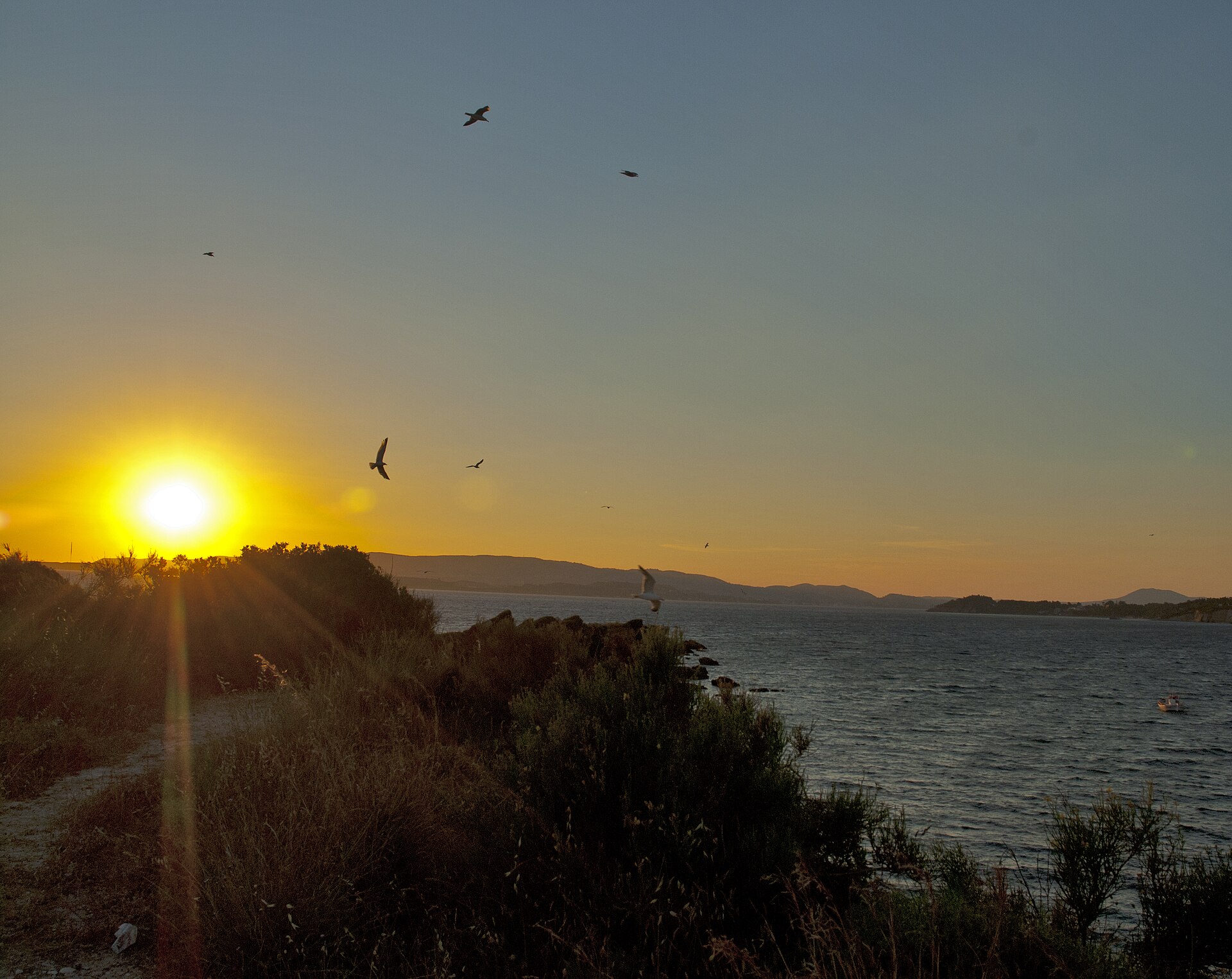
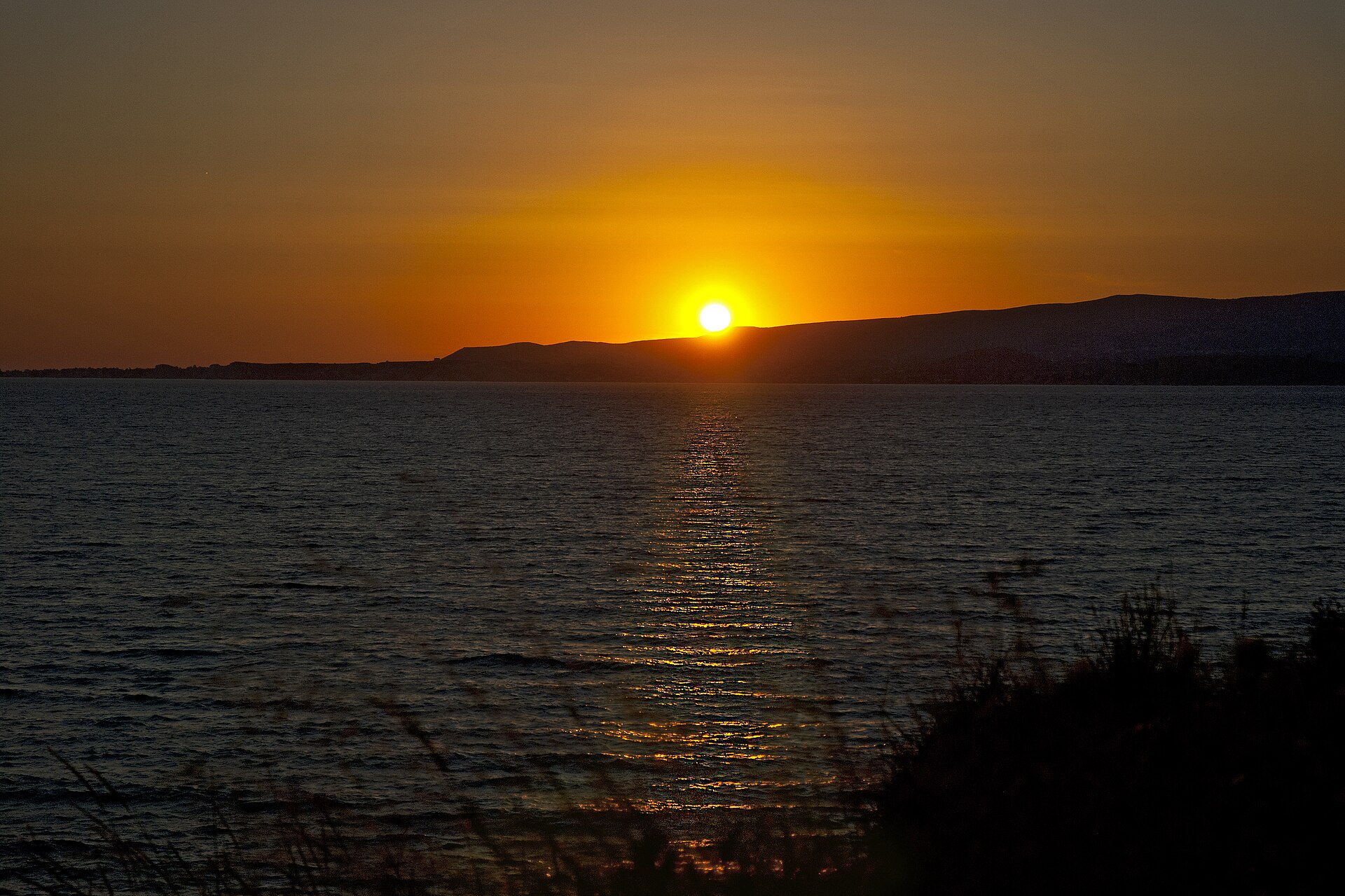
Also known as the Drapano bridge, the structure commissioned by De Bosset crosses the Koutavos lagoon with a sequence of small stone arches and a long pedestrian and vehicle causeway, with an overall length close to seven hundred metres: at the time of its construction it was considered the longest sea bridge in the Western world. Damaged several times by earthquakes and rebuilt over the years, it remains today a much-loved place for a sunset stroll, when the low light sets the lagoon's shallow water aglow and traces the silhouettes of fishermen casting their lines from the railings. For those arriving in Minia from Argostoli, crossing it on foot or by bicycle is the most evocative way to approach the village.
The Koutavos lagoon, between nature and memory
Behind the bridge opens the Koutavos lagoon, a shallow inlet protected as a nature reserve and skirted almost entirely by a footpath and cycle path. It is a refuge for herons, cormorants and other waterbirds, and it is not uncommon for a loggerhead sea turtle (Caretta caretta) to appear in the innermost waters, drawn by fish scraps from the Argostoli market. In the background rises the silhouette of Mount Ainos, the island's highest peak, closing the horizon inland. The combination of brackish water, riparian vegetation and urban skyline makes this stretch one of the most photographed corners of the entire Argostoli-Minia area.
Argostoli, the capital within walking distance
From Minia, Argostoli is reached in just a few minutes by car or with a pleasant walk along the bridge. The island's capital since Venetian times, it is home today to the main port, the lively Saturday morning market, the pedestrian street of Lithostroto with its shop windows and cafés, and a seafront lively in the evening with strollers and taverns. Also worth a stop is the small Archaeological and Korgialenios Museum, which gathers finds ranging from the ancient tetrapolis to Roman times. Those staying in Minia find in Argostoli the natural base for services, restaurants and nightlife, while still enjoying the quiet of a satellite village when they return to sleep.
The beach of Minia
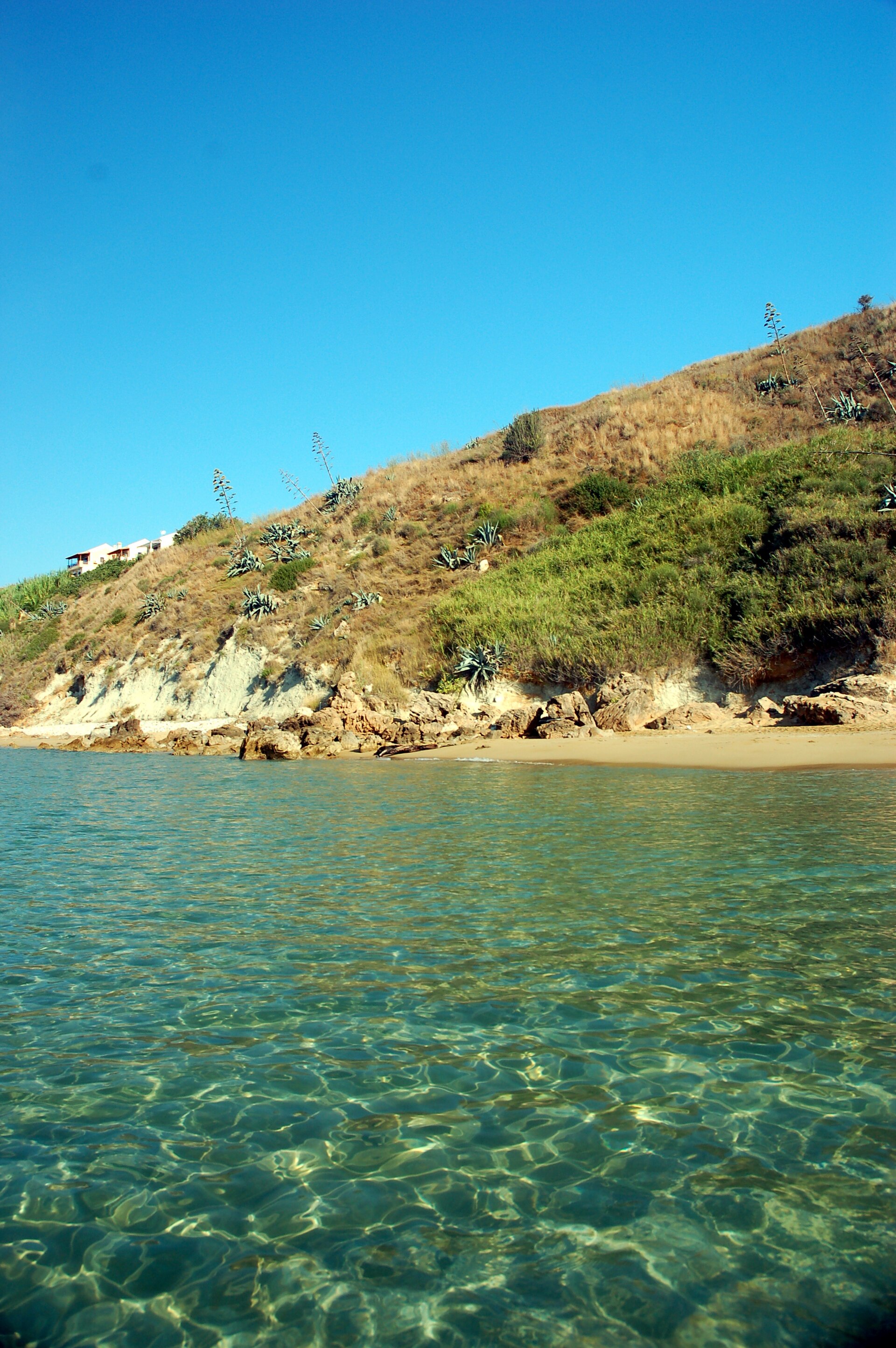
The tourist heart of the settlement is its beach, an arc of sand mixed with fine pebbles that slopes gently into a shallow, turquoise sea, ideal for families with small children. Unlike the more scenic and crowded beaches of the island's west coast, Minia's has a more intimate, homely character: a limited number of sun loungers and umbrellas, a couple of taverns overlooking the water, and the comings and goings of people arriving from Argostoli for a quick swim after work. It is the perfect beach for those seeking comfort without giving up a local atmosphere, far from the large resorts of the Lassi coast.
The Katavothres and the mystery of the vanishing water
A little beyond Argostoli, towards the headland that closes off the bay, lie the Katavothres: natural sinkholes where seawater flows underground through the island's karstic limestone. In the nineteenth century this flow even powered a small mill built by British engineers. For decades the fate of that water remained a mystery, until a dye-tracing experiment showed that it resurfaced, days later, on the other side of the island in the underground lake of Melissani, near Sami. It is one of Greece's most curious geological phenomena and speaks well to the karstic, porous nature of the ground on which Minia's territory also rests.
The Fanari lighthouse and the coast to the south
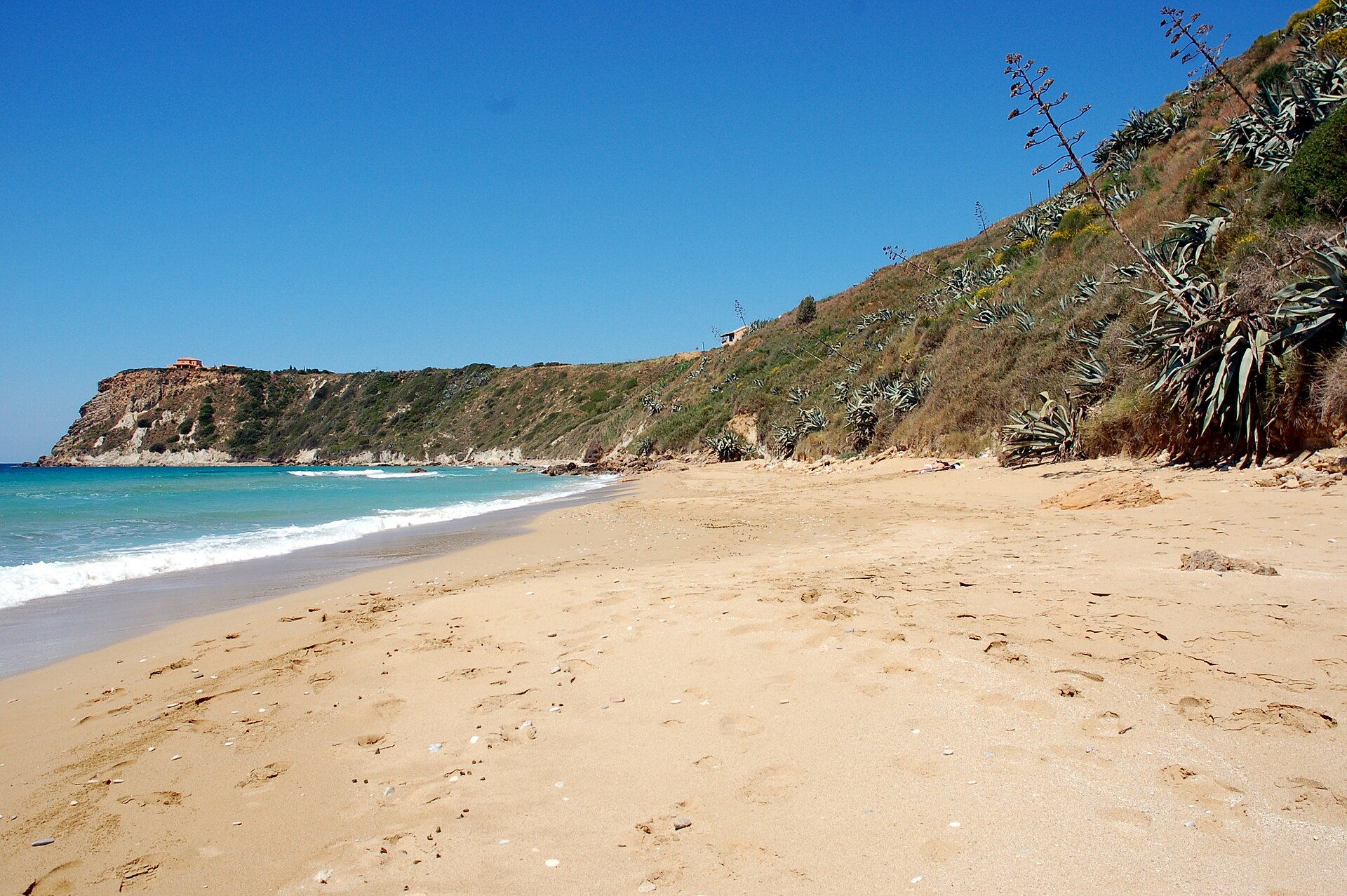
On the point that closes off the bay of Argostoli to the west stands the Fanari lighthouse, a Doric-style rotunda built by the British in the first half of the nineteenth century and later rebuilt after the 1953 earthquake. It is one of the most beloved viewpoints for watching the sunset, with the coast running south from here in a succession of rocky coves and small inlets as far as Minia and beyond, towards Svoronata and Trapezaki. The coastal road linking these stretches is a pleasant route to travel by scooter or bicycle, with frequent stops for impromptu swims in the clear waters.
Lassi and Argostoli's tourist riviera
Just minutes from Minia, on the opposite side of the capital, lies Lassi, the area's most touristy coastal strip, with hotels, resorts, bars and the famous White Rocks beach, with its distinctive pale sand framed by white cliffs. It is the lively counterpart to Minia's quiet: those seeking nightlife and full amenities head here in the evening, before returning to the village to rest. This proximity between two such different souls — one residential and intimate, the other touristy and lively — is one of the reasons the area around Argostoli appeals to very different kinds of travellers.
The landscape and nature of Cephalonia
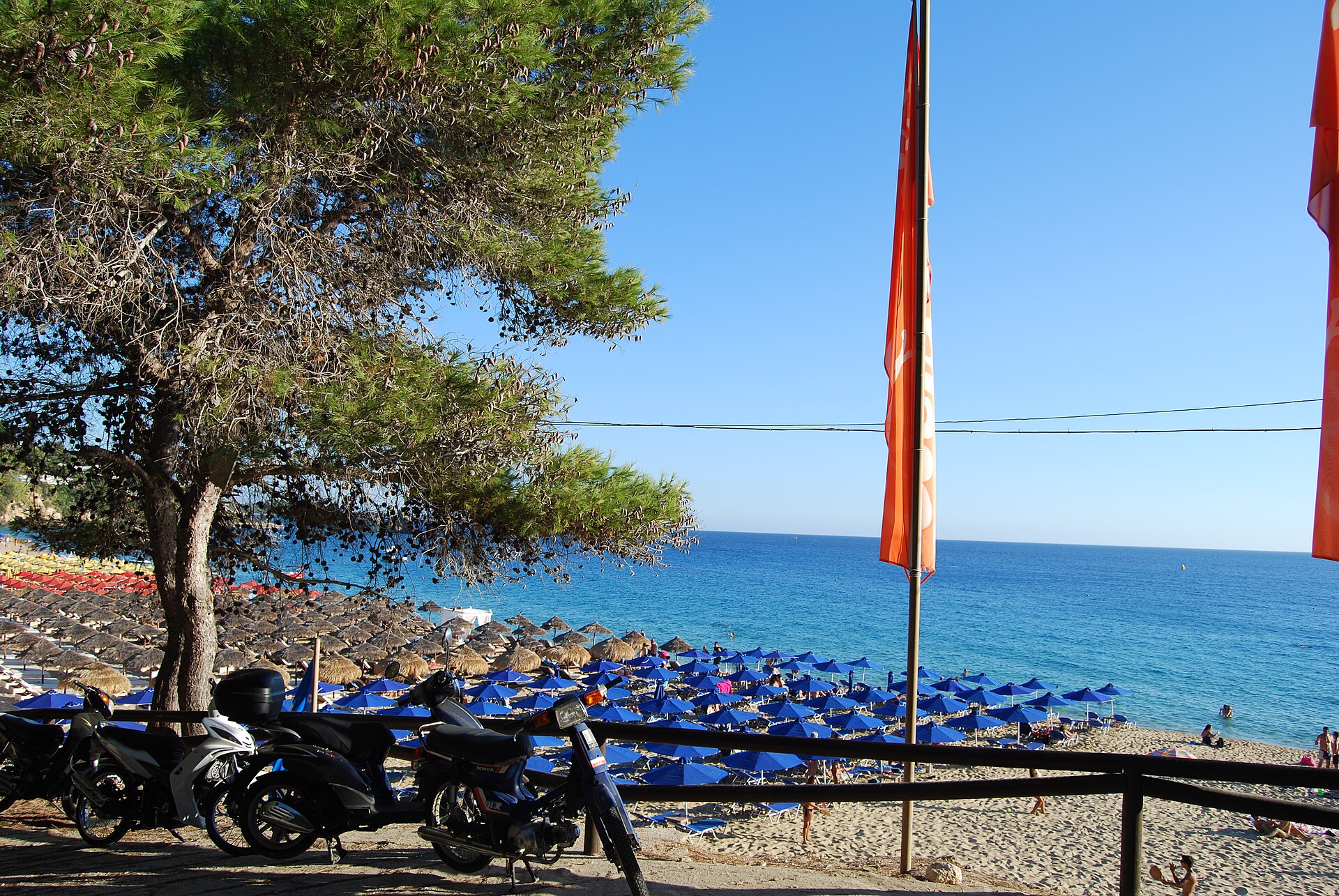
Cephalonia is the largest of the Ionian Islands, and its geography alternates very low-lying coasts, like those of Minia and Koutavos, with limestone cliffs plunging into the sea and a mountainous interior dominated by Mount Ainos National Park, home to relict forests of Cephalonian fir, a species endemic to the island. Centuries-old olive groves run down almost to the water along much of the southern coast, while terraced vineyards preserve the Robola grape variety, grown on the limestone slopes around Omalos. This variety of landscapes packed into just a few square kilometres is one of the island's distinctive traits and turns every journey, even a short one, into a change of scenery.
Flavours and traditions of the island
Cephalonian cuisine revolves around a handful of signature dishes: kreatopita, a savoury pie of meat and rice wrapped in thin pastry, aliada, a garlic sauce served with fried salt cod, and tsigarelia, wild greens sautéed with chilli. Almost always accompanying the table is a glass of Robola, the dry, mineral white wine regarded as the island's oenological jewel, produced by a consortium of small winegrowers. In the summer months there is no shortage of panigyria, village patron-saint festivals with live music, dancing in the square and shared communal tables — precious occasions to grasp the popular soul of an island that still lives very much by the rhythms of the religious calendar.
Everyday life in Minia
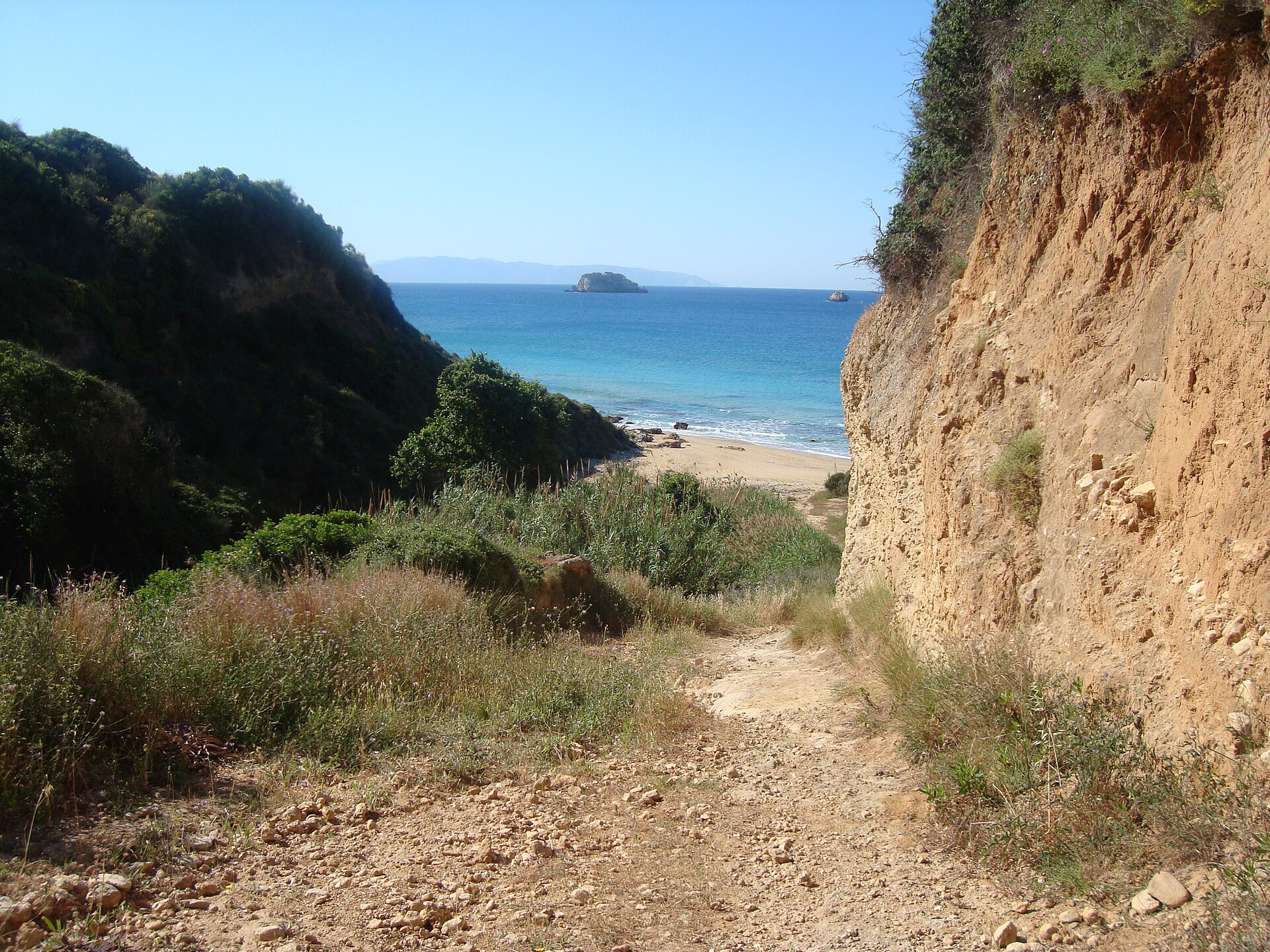
Outside the summer months, Minia goes back to being what it has always been: a small community of houses scattered among vegetable gardens and olive groves, with families dividing their time between fishing, olive growing and a daily commute to Argostoli for work. The white chapels dotted along the coast, often little more than a single room with an icon and an oil lamp, mark the small-scale religious landscape typical of Ionian villages. It is in these details — the sound of cicadas, the smell of brine mixed with olive resin, the nets laid out to dry — that one grasps the difference between Minia and destinations more built up for tourism.
When to go to Minia
The ideal season runs from May to June and from September to early October, when the sea is already warm or still is, temperatures remain pleasant and the beach is not as crowded as in August, the peak month for Greek and European tourism. July and August offer the warmest sea and the longest days, but also heavier traffic on the coastal road and higher prices. Winter is on average mild and rainy, with many seasonal activities closed: a period suited only to those seeking an authentic, silent island, far from any tourist logic.
Experiences not to miss
- Crossing the De Bosset bridge on foot or by bicycle at sunset
- Swimming in the shallow, turquoise waters of Minia beach
- Strolling along the nature trail of the Koutavos lagoon
- Visiting the underground lake of Melissani and the Drogarati cave
- Tasting Robola wine at a winery in the Omalos hinterland
- Admiring the sunset from the Fanari lighthouse, on the point of Argostoli
- Browsing the stalls of Argostoli's Saturday market
Excursions in the surrounding area
From Minia, half-day or full-day excursions to Cephalonia's most famous sights can be conveniently arranged: the karstic lake of Melissani, lit by an opening in the cave's roof and navigable by boat, the nearby Drogarati cave with its natural acoustics, and Myrtos beach, perhaps the most photographed on the island, enclosed between brilliant white limestone cliffs. To the north, Assos, a Venetian village on an isthmus topped by a fortress, and Fiskardo, the only village that retained its original architecture after the 1953 earthquake, are both well worth a stop. All these destinations can be reached by car in times ranging from thirty minutes to an hour and a half.
FAQ
Come si arriva a Minia da Argostoli?
Qual è il periodo migliore per visitare Minia?
Cosa vedere in un giorno tra Minia e Argostoli?
Dove si parcheggia a Minia?
Quanto tempo conviene fermarsi?
È adatta a famiglie con bambini piccoli o con animali?
Getting there
- Aeroporto Internazionale di Cefalonia "Anna Pollatou" (EFL), circa 8-10 km da Minia
- Dall'aeroporto e dal porto di Argostoli si raggiunge Minia in pochi minuti seguendo la strada costiera verso sud e attraversando il ponte De Bosset; da Poros o Sami, sul lato orientale dell'isola, si arriva in circa 45-60 minuti percorrendo le strade panoramiche interne.
- In alta stagione conviene noleggiare un'auto o uno scooter direttamente in aeroporto: i collegamenti con gli autobus locali KTEL sono limitati e Minia si esplora molto meglio con mezzi propri.
Perfect for
Acque basse e trasparenti rendono la spiaggia di Minia una delle scelte più comode per genitori con bambini piccoli.
Il ponte De Bosset e i Katavothres raccontano due secoli di dominazioni e di curiosità geologiche uniche sull'isola.
La laguna di Koutavos e il Parco Nazionale del Monte Enos offrono passeggiate immerse in ambienti naturali molto diversi tra loro.
Il vino Robola e piatti come la kreatopita raccontano l'identità gastronomica di Cefalonia a pochi minuti da Minia.
Dal ponte al faro di Fanari, la zona si presta a camminate brevi con vista sul mare a ogni ora del giorno.