Vathi
Arriving in Vathi means slipping into the heart of a myth that has never stopped breathing
Updated 7 July 2026
This season · July · Summer
What to do in Vathi now
The story
The story of Vathi
A history suspended between myth and resilience
The history of Vathi is inseparably bound to that of Ithaca as a whole, the island Homer chose as home for his most famous hero. Although archaeological evidence suggests settlement as far back as the Mycenaean era, Vathi's present urban layout took shape mainly under Venetian rule, from the 16th century onward. The Venetians recognized the strategic importance of the natural harbor, turning it into a vital trading hub for Ionian shipping routes. Over the centuries, the island passed under French and British influence, becoming part of the Kingdom of Greece in 1864. However, the event that most deeply marked the town's face was the earthquake of 1953. Much of the historic building stock collapsed, but the residents' determination allowed for a careful reconstruction that respected the traditional architectural style, preserving the chromatic and structural identity that makes Vathi a nationally protected settlement.
The islet of Lazaretto: sentinel of the bay
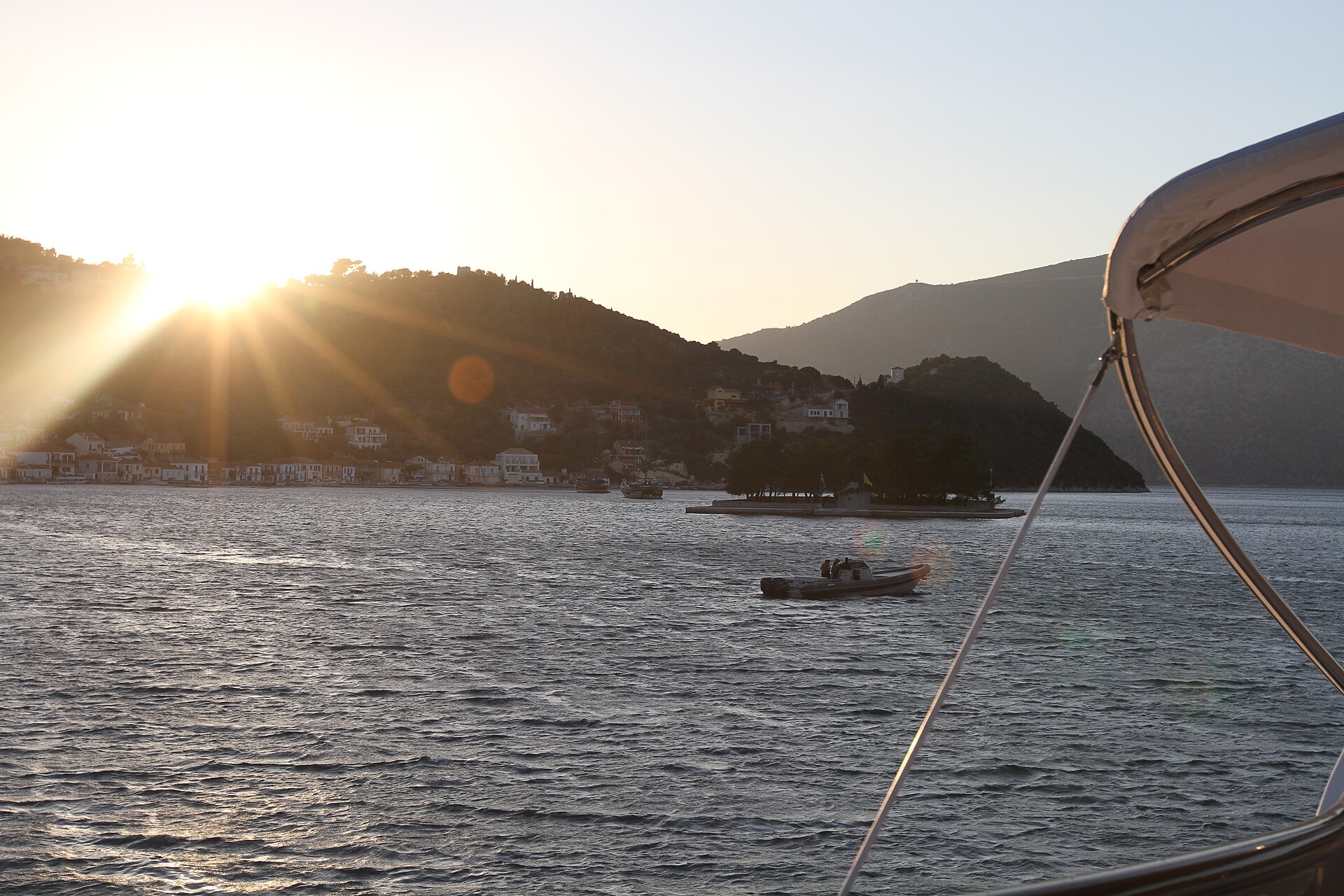
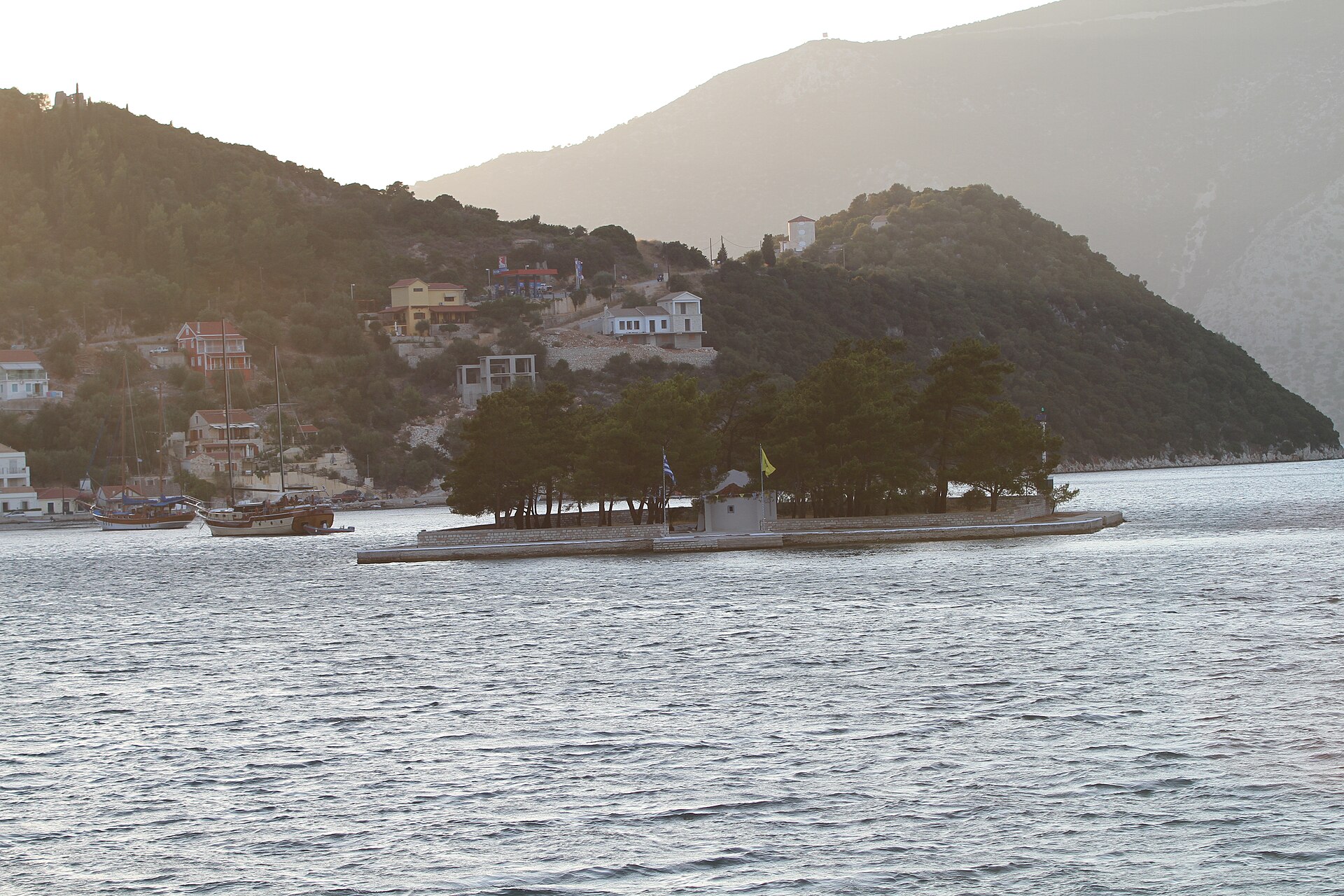
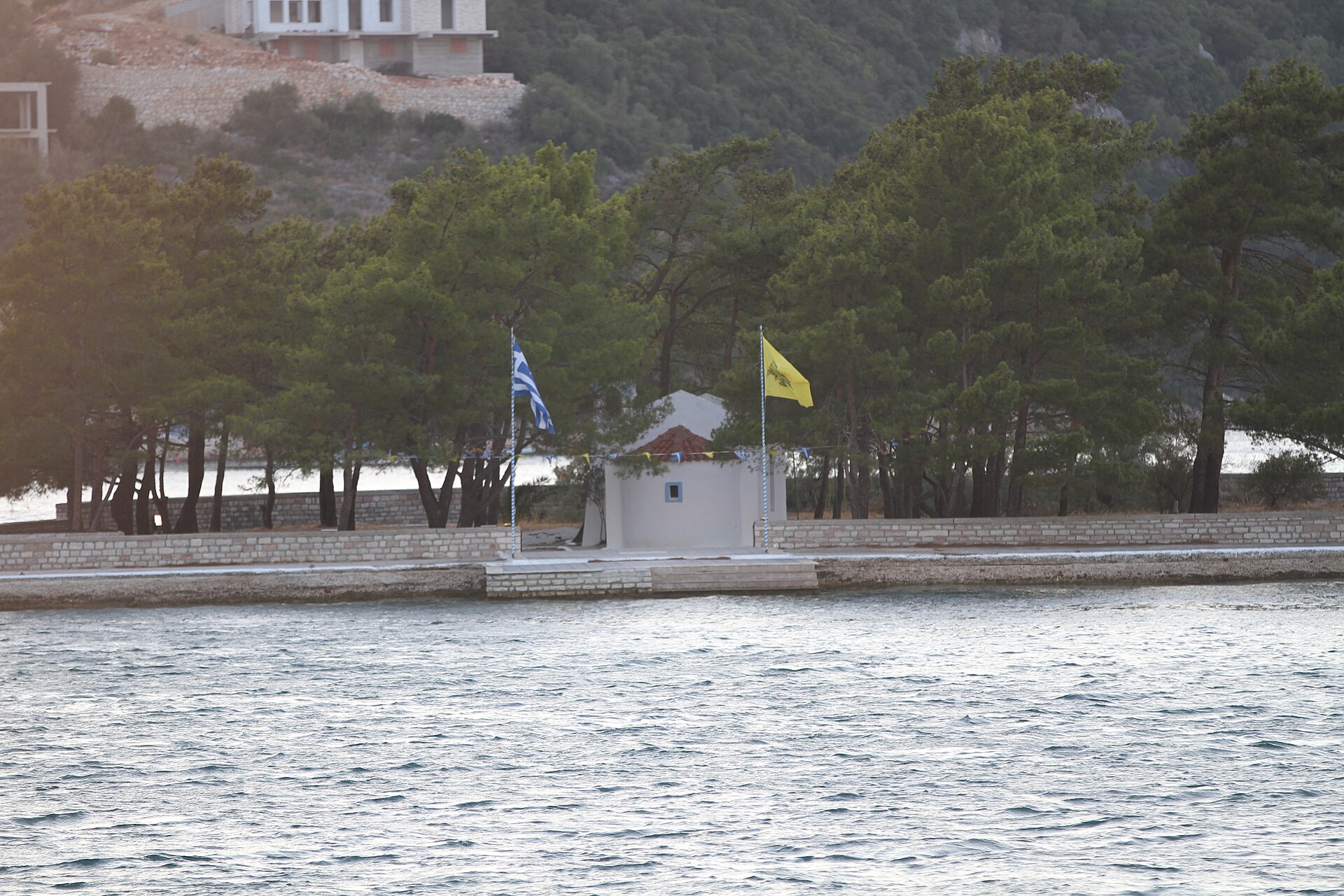
Right at the center of the entrance to Vathi's harbor rises the tiny islet of Lazaretto, a green gem crowned by the small chapel of Sotiras (the Savior). Originally built by the Venetians in 1668 as a quarantine station for incoming ships, the main building has had several lives over the centuries: it has been a prison for political detainees, a shelter, and finally a place of historical memory. Today, the island is an iconic symbol of the town's skyline, reachable only by small private boats or admired from the shores of the harbor. Its silhouette, framed by pines, is particularly striking at sunset, when the church lights come on and reflect on the still water, creating a postcard image that embodies the island's mystical peace.
The Archaeological Museum of Ithaca
For those wishing to explore the Homeric roots of the area, the Archaeological Museum of Vathi is an essential stop. Housed in a modest building not far from the waterfront, it holds a precious collection of finds spanning from the Geometric to the Roman period. Among the most significant pieces are finely decorated vases, votive statuettes and ancient coins that attest to the island's cultural wealth in antiquity. Of particular importance are the finds from the excavations at Aetos, which offer a glimpse into the daily life and religious rites of Ithaca's ancient inhabitants. The museum is not merely a repository of objects, but a quiet account of the historical continuity of a people who, despite foreign rule, have always kept a very strong bond with their land and their legends.
The Naval and Folklore Museum
Housed in a former barracks building, the Naval and Folklore Museum of Vathi celebrates the seafaring soul of the Ithacans. Inside, visitors are transported to an era when Ithaca possessed one of the most important merchant fleets in the Mediterranean. The collection includes period navigation instruments, scale models of historic ships, yellowed photographs of captains and sailors, as well as traditional costumes, period furniture and tools of rural life. It is a place dense with nostalgia and pride, where one comes to understand how survival on such a rugged island has always depended on mastery of the sea and the hard-won cultivation of the steep surrounding hills. A visit here allows you to go beyond the tourist surface and touch the moral fiber of the local community.
The Cathedral of the Virgin and its Bell Tower
Vathi's Cathedral, dedicated to the Panagia (the Virgin Mary), is the spiritual heart of the town. What strikes you immediately is its splendid white bell tower, rising above the red rooftops and serving as a visual landmark for anyone arriving by sea. The church's interior is a small treasure of Byzantine and post-Byzantine art, with a magnificent carved wooden iconostasis that attests to the skill of local craftsmen. The atmosphere is intimate, scented with incense and beeswax, far from the busier tourist flows. During religious festivals, the square in front comes alive with worshippers, becoming the center of an ancient, genuine sociability, where faith blends with popular tradition in a typically Greek union.
The Cave of the Nymphs: between reality and legend
A short distance from the center of Vathi lies Marmarospilia, better known as the Cave of the Nymphs. According to Homeric tradition, it was in this very cave that Ulysses, having just landed on Ithaca after twenty years' absence, hid the gifts he had received from the Phaeacians before heading to Eumaeus's hut. The cave has two entrances: one for the gods and one for mortals, exactly as described in the Odyssey. Although internal access is sometimes restricted for safety reasons, the site retains a magnetic charm. Set within an area of Mediterranean scrubland overlooking Dexa Bay, the cave invites reflection on the thin line separating epic narrative from geographical reality, making the myth tangible in every stone and every gust of wind rising from the coast.
The village of Perachori: the balcony over Vathi
Climbing the switchbacks that wind up above Vathi, you reach Perachori, the only village on the island with a full view over the capital and its harbor. Once the island's administrative capital during the era of pirate raids, Perachori today is a quiet hamlet, known for producing an excellent local wine and for its authentic taverns. Strolling among its houses means immersing yourself in a rural dimension, where terraced vineyards defy the steepness of the land. From here, several hiking trails lead to the ruins of the old medieval town (Paleochora), with its now-decaying frescoed churches, offering a privileged glimpse into the island's older, wilder history, far from the gleam of the sailing boats moored in the harbor below.
Nature and coastline: the sea of Ithaca
The landscape surrounding Vathi is a triumph of Mediterranean biodiversity. The coast is a succession of small coves, limestone cliffs and white pebble beaches that give the water an almost glassy transparency. Not far from the harbor is Loutsa beach, ideal for a quick swim, but venturing a little further reveals the true gems, such as Filiatro beach, ringed by olive trees offering natural shade almost down to the water's edge. For the more adventurous, a trail or a boat leads to Gidaki, considered by many one of the most beautiful beaches in all of Greece for the contrast between the dazzling white of the pebbles and the turquoise hues of the sea. Here nature reigns supreme, offering a silence broken only by the song of cicadas and the murmur of waves.
Culinary traditions and Ionian flavors
Vathi's cuisine reflects the island's identity: simple, flavorful and bound to the produce of land and sea. A not-to-be-missed dish is 'Savoro,' fried fish marinated with vinegar, rosemary and raisins, a recipe of clear Venetian influence originally used to preserve the day's catch. Equally famous is 'Rovani,' Ithaca's traditional dessert made of rice and honey, dense in texture and caramel-like in flavor, traditionally served at weddings and patron saint feasts. In the restaurants along the harbor, grilled lamb or octopus stewed in local red wine are must-tries. Every meal is accompanied by Ithacan olive oil, renowned for its low acidity and intense aroma, the fruit of centuries-old olive groves that shape the rural landscape of the interior.
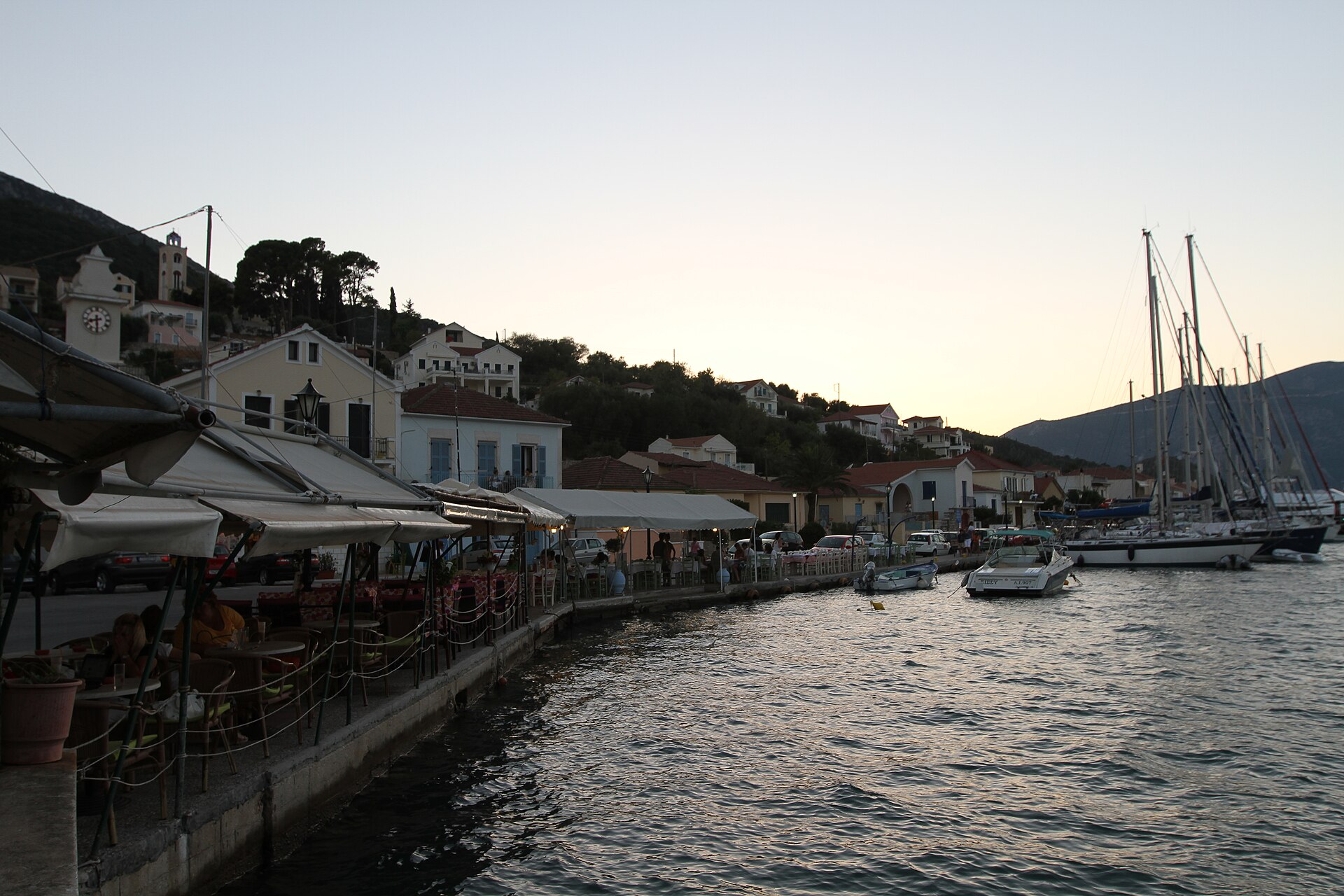
- Stroll along Vathi's harbor at sunset, as the lights come on.
- Rent a small motorboat to explore the secluded coves and the islet of Lazaretto.
- Visit the Archaeological Museum to discover the historical ties to Homeric epic.
- Climb up to Perachori to enjoy the panoramic view and taste the local wine.
- Take a hike to the Cave of the Nymphs, following in Ulysses' footsteps.
- Spend a day at Gidaki beach, reachable by sea.
- Taste Rovani at one of the historic pastry shops in the town center.
When to go and how to experience the place
The best time to visit Vathi runs from May to the end of September. Spring is ideal for those who love trekking and want to see the island in bloom, with mild temperatures that make it easy to explore the inland trails. July and August are the hottest and busiest months, alive with cultural events and music festivals, but the sea breeze blowing through the fjord keeps evenings pleasant. September perhaps offers the perfect balance: the sea is warm, the light is golden and the crowds of yacht-goers begin to thin out, returning to Vathi that sense of quiet and introspection which is its true essence. To experience Vathi is to forget the clock, adapt to the slow rhythms of the fishermen, and let yourself be lulled by the feeling of having finally arrived at a place where the soul can rest.
FAQ
Quanto tempo serve per visitare Vathi?
È una destinazione adatta alle famiglie?
Si può parcheggiare facilmente?
Vathi è molto costosa?
È necessario noleggiare un'auto?
Getting there
- Aeroporto di Cefalonia (EFL) + traghetto da Sami
- Non presenti sull'isola
- Da Atene in auto verso il porto di Patrasso o Astakos, poi traghetto per Itaca (Pisaetos o Vathi).
- Il traghetto da Sami (Cefalonia) a Pisaetos impiega solo 20-30 minuti, rendendolo il collegamento più rapido.
Perfect for
Un viaggio nei luoghi dell'Odissea, tra musei archeologici e siti leggendari.
Uno dei porti naturali più protetti al mondo, paradiso per i navigatori e amanti delle baie incontaminate.
Perfetto per chi cerca una fuga dalla frenesia, tra ritmi lenti e autenticità greca.
To see
What to see in Vathi
Routes · Trovido Route