Yeoryioupoli
Adagiata nel punto in cui le acque dolci del fiume Almiros incontrano l'abbraccio salmastro del Mare di Creta, Yeoryioupoli (o Geo...
Обновлено 7 июля 2026
В этом сезоне · июль · Лето
Чем заняться в Yeoryioupoli сейчас
Рассказ
История Yeoryioupoli
From the ruins of Amphimalla to modern rebirth
The roots of Yeoryioupoli stretch into antiquity, when the ancient city of Amphimalla, the old port of the mighty city-state of Lappa, stood in this area. During the Roman and Byzantine periods, the site was a strategic commercial hub, but with the passage of centuries and successive dominations, the area transformed into a swampy and malaria-ridden zone, becoming nearly abandoned. The turning point came in 1893 thanks to Miltiadis Papadogiannakis, a merchant who decided to reclaim the lands and establish a new settlement. The village took its current name in 1899 in honour of Prince George of Greece, High Commissioner of the then-autonomous State of Crete. This story of resilience and transformation is still visible in the orderly urban layout and the lush vegetation surrounding the settlement, testament to the imposing drainage work that rendered this stretch of Cretan coast fertile and hospitable.
The Chapel of Agios Nikolaos: a temple amidst the waves
The undisputed symbol of Yeoryioupoli is the small white chapel of Agios Nikolaos, dedicated to the protector of sailors. What renders it extraordinary is its position: it stands upon a tiny rocky islet at the end of a long, narrow stone pier that juts out into the sea. Treading this path suspended over the water, often lashed by the spray of waves, is an almost mystical experience. The chapel, with its essential Cycladic architecture and the blinding contrast between the whitewash lime and the profound blue of the sea, offers one of the most photographed vistas on all of Crete. Inside, the space is minimal, steeped in the aroma of incense and beeswax, a place of silent prayer that seems to float upon the waters, especially at sunset when the sun plunges into the sea just beyond the church's silhouette.
The Almiros River and the river port
Unlike many other Cretan localities, Yeoryioupoli is characterised by an abundance of fresh water. The Almiros River flows here, creating a small estuary that serves as a natural port for the boats of local fishermen. The river banks are lined with reeds and riparian vegetation, creating a cool microclimate even on the hottest summer days. It is common to observe freshwater turtles, ducks, and a rich avifauna that has found a safe haven in this ecosystem. A small bridge crosses the watercourse, connecting the village centre to the beach zone, offering a picturesque view of colourful boats bobbing gently. This abundance of water has not only shaped the natural environment but still defines the identity of the hamlet, making it a verdant oasis that contrasts with the drier zones of the island.
The Avenue of Eucalyptus: the monumental entrance
Arrival at Yeoryioupoli is announced by an imposing tree-lined avenue extending for approximately one kilometre, flanked by majestic eucalyptus trees. These trees were planted not merely for aesthetic purposes but were part of the original project to reclaim the marshes at the end of the nineteenth century: thanks to their capacity to absorb large quantities of water, they contributed to restoring the land. Today, these green giants form a natural tunnel that bestows deep shade and a suspended atmosphere. Strolling beneath their fronds, hearing the rustle of wind through the lance-like leaves and the balsamic fragrance that emanates, is the perfect prelude to discovering the village. The avenue has become a protected natural monument, symbol of the indissoluble bond between the community and the territory they managed to rescue from the swamp.
The Beaches: kilometres of sand and crystalline waters
The coast of Yeoryioupoli boasts one of Crete's longest beaches, stretching for nearly nine kilometres eastward, towards the Kavros area. The sand is fine and golden, caressed by a sea that slopes gently, making it ideal for families. In certain spots, underground springs of fresh water that flow into the sea create cool and refreshing currents, a unique sensation during the summer heat. While the area near the village is well-equipped with loungers and taverns, proceeding eastward one finds wilder and more solitary stretches, where sandy dunes are interrupted only by spontaneous vegetation. For those seeking a more intimate atmosphere, the small beach of Kalivaki, situated west of the river mouth, offers calm, sheltered waters, framed by a scenery of rocks and tamarisks.
Lake Kournas: Crete's azure eye
Just four kilometres from Yeoryioupoli lies Lake Kournas, Crete's sole natural freshwater lake. Nestled between hills and the foothills of the White Mountains (Lefka Ori), the lake is a nature reserve of extraordinary beauty. Its waters change colour depending on light and depth, shifting from pale turquoise to midnight blue. It is possible to rent a pedalo to explore the more remote shores, where it is easy to spot two-toned turtles basking on submerged logs. Local legends tell of nymphs inhabiting its depths, but beyond myth, Kournas is a place of absolute peace, ideal for a walk around the perimeter or for savouring a meal at one of the panoramic taverns offering a spectacular view of the entire basin.
The Hinterland: Argiroupoli and the Springs of Lappa
Ascending towards the hills behind Yeoryioupoli, one reaches Argiroupoli, a hamlet built upon the ruins of ancient Lappa. This place is celebrated for its waterfalls and perennial springs that spout from the rocks, feeding water mills and creating an atmosphere of rejuvenating freshness. Wandering through the streets of the upper village, one can admire Roman remains, mosaics, and Venetian portals set into modern dwellings. The spring zone is a succession of taverns where water literally flows between the tables, creating an enchanting atmosphere. Here the speciality is fresh trout, but the entire village is renowned for avocado-based products and artisanal leather work, maintaining traditions dating back centuries.
Flavours and traditions: the cuisine of Apokoronas
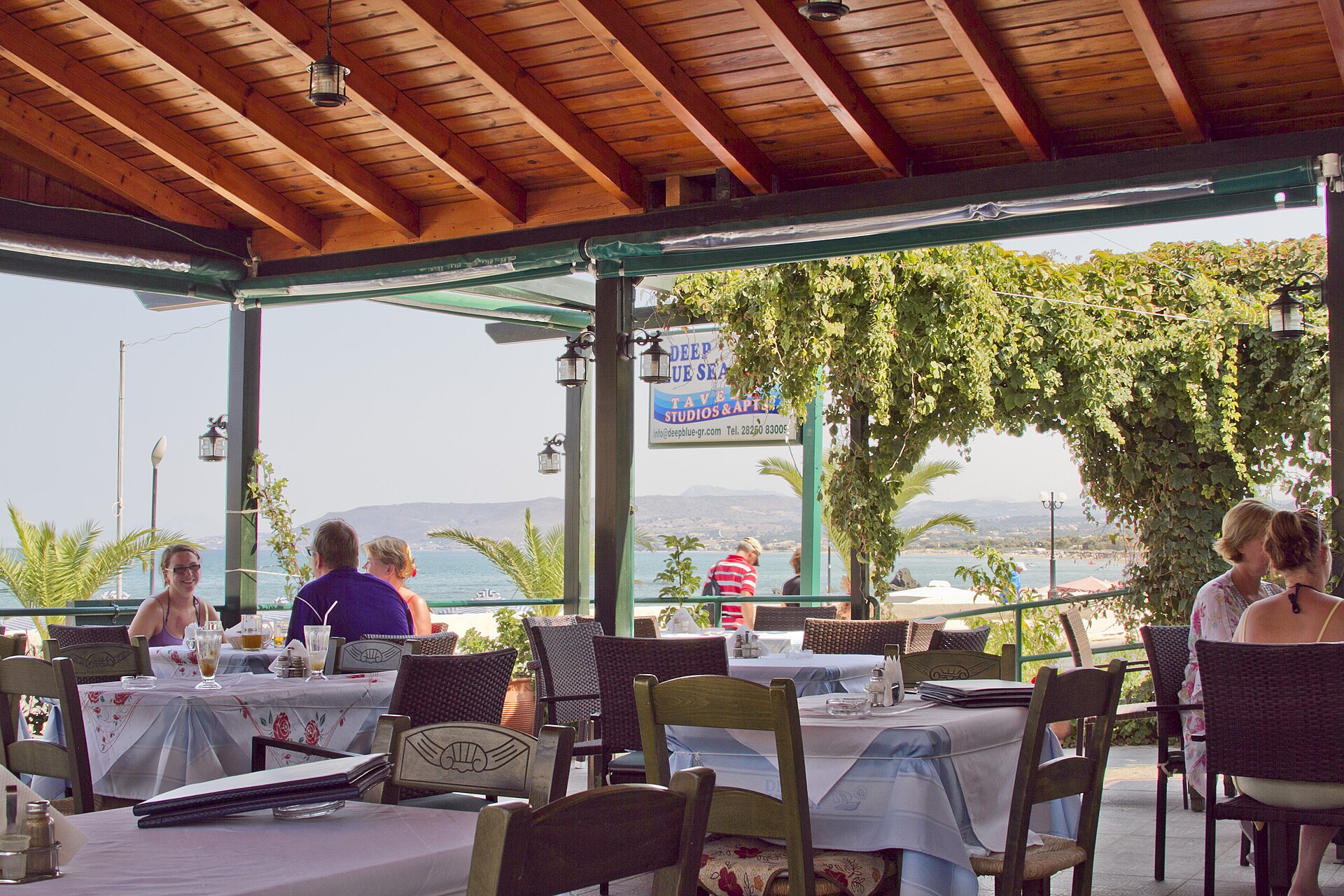
The gastronomy of Yeoryioupoli reflects the richness of the Apokoronas region, a perfect union of sea and land produce. In the village taverns, fresh fish is the protagonist, but traditional dishes from the mountainous interior are not lacking. Not to be missed is 'Staka', a butter and flour cream typical of the area, and 'Boureki', a pastry of courgettes, potatoes and mizithra cheese. The thyme honey produced on the nearby White Mountains is of exceptional quality, as is the extra virgin olive oil that here has an intense, fruity flavour. Sitting in the central square in the shade of plane trees, sipping a glass of raki accompanied by 'dakos' (toasted bread with tomato and feta), is the best way to attune yourself to the hospitable spirit of the Cretans.
- Walk along the stone pier to the chapel of Agios Nikolaos at sunset.
- Rent a pedalo on Lake Kournas to spot turtles.
- Stroll in the shade of the eucalyptus avenue breathing the balsamic air.
- Explore the streets and springs of ancient Lappa at Argiroupoli.
- Taste fresh fish in one of the taverns along the Almiros River.
- Take a long morning walk along the golden beach towards Kavros.
When to visit and how to experience the hamlet
The ideal time to visit Yeoryioupoli extends from May to October. Spring (May and June) is magical: nature is in full bloom, temperatures are mild, and the village is tranquil, ideal for those who love excursions into the hinterland. Full summer (July and August) brings life and activity, with beaches filling up, but thanks to the sea breeze and the presence of the river, oppressive heat is rarely overwhelming. September and early October offer warm waters for swimming and golden light perfect for photography, with a more relaxed atmosphere. To experience the place as a local, avoid the hottest hours and enjoy the central square in the evening, when families gather and the hamlet reveals its most authentic and convivial soul.
Частые вопросы
È una località adatta alle famiglie con bambini?
Quanto tempo occorre per visitare Yeoryioupoli?
È facile trovare parcheggio?
Ci sono mezzi pubblici per raggiungere le città vicine?
Как добраться
- Aeroporto di Chania (CHQ) - 45 km
- Aeroporto di Heraklion (HER) - 100 km
- Non presenti (Creta non ha rete ferroviaria)
- Percorrere la New National Road (E75) che collega Chania a Rethymno; l'uscita per Georgioupoli è ben segnalata.
- Noleggiare un'auto è l'opzione migliore per esplorare i villaggi dell'Apokoronas e il lago di Kournas in autonomia.
Идеально для
Perfetto per chi cerca un connubio tra mare cristallino, fiumi d'acqua dolce e un entroterra collinare rigoglioso.
Spiagge sicure, aree pedonali e attività all'aria aperta lo rendono una meta ideale per chi viaggia con bambini.
Dalla chiesetta in mezzo al mare al viale degli eucalipti, offre scorci iconici e luci spettacolari ad ogni ora.
Что посмотреть
Достопримечательности Yeoryioupoli
Пути · Trovido Route